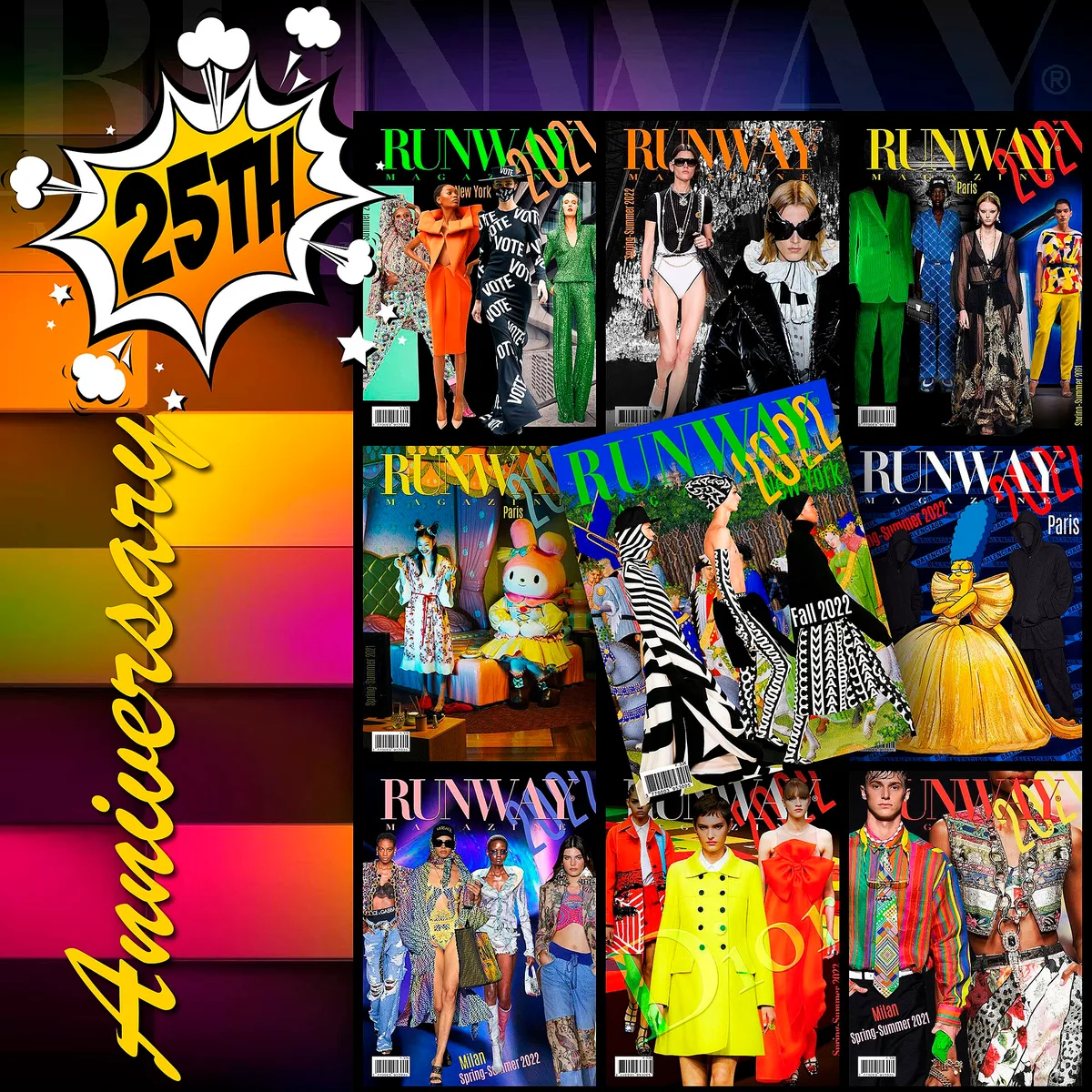
A runway magazine, in the trade shorthand, is a title built around collection coverage, and it works differently from a mainstream glossy. The glossy sells a season across beauty, culture, and living. The runway title documents the clothes look by look and keeps the record searchable. Style.com, launched under Condé Nast in 2000 and folded into Vogue Runway in 2015, marks the digital turn of that dedicated format, per the reference account of the site.
The split matters for anyone reading a season. A glossy frames a collection inside a narrative. A runway title holds the images and the order of exits, so the trade can check a claim against the record. The difference is not prestige. It is function, and the two formats now share one season. Readers following this should also see Look One Is Never an Accident: How a Show's Running Order Is Built.
What Did the First Fashion Press Look Like?
Dedicated fashion press predates the glossy by a century. Fashion journalism took shape in the 18th century, when fashion dolls gave way to fashion magazines, notably the Cabinet des Modes, recognized as the first true fashion magazine, per the reference account. Titles followed abroad: the Journal des Luxus und der Moden ran in Germany from 1786 to 1827, and the Gallery of Fashion ran in Britain from 1794 to 1803.
The format was illustrated plates and reporting on Paris taste. The trade read the plates the way it now reads look archives, as documentation of a season. The job description has barely moved in two hundred years, and the digital formats kept the same promise: the season, written down.
How Does a Glossy Cover a Collection?
Vogue states its own range plainly: style news across haute couture, beauty, fashion, culture, living, and runway, per the reference account. The magazine was founded in 1892 by Arthur Baldwin Turnure as a weekly and became a monthly in 1973. As of March 2025, the count stood at 28 international editions.
A glossy reads a collection as culture. The collection sits beside portraits, essays, and commerce, and the season becomes a story with a cover on it. That framing wins reach. It does not preserve every look.
What Changed When Runway Coverage Moved Online?
Style.com carried the dedicated format onto the internet. Under Condé Nast, starting in 2000, it was the online site for Vogue and W, with event photographs and style articles of its own, per the reference account. In April 2015, its content migrated to Vogue Runway, a channel on Vogue.com, and the runway archive went offline on 31 August 2015.
Digital delivery changed the unit of the work. Per the reference account of fashion journalism, the digital format gives a writer unlimited space, links, many images, and real-time corrections. A runway title could hold every exit of a season instead of a printed selection. The page count stopped being the limit.
Why Does the Split Matter for a Season?
The two formats answer different questions. A buyer or editor checks what walked. A culture reader checks what it meant. The dedicated title makes the first question cheap to answer, because the archive is the product, while the glossy makes the second question rich.
Major magazines adjusted rather than surrendered. Vogue, Elle, Marie Claire, and other titles added an online component in addition to print, per the reference account, and the runway archive moved inside the same houses. The functions stayed distinct even under one roof.
The archive also disciplines the trade. A claim made in a show note can be checked against the exits on record, and the dedicated title holds both sides of that check. Print could not close the loop at season speed. The digital archive closes it by default.
Conclusion: One Season, Two Records
The record of a fashion season now lives in two registers. The glossy holds the interpretation, and the runway title holds the evidence, exit by exit. The work splits cleanly: documentation at scale on one side, framing on the other. A reader who wants the whole season needs both, and the digital turn made that pairing ordinary. This connects to our earlier piece, Who Predicts Fashion Two Years Out: Inside the Trend-Forecasting Industry.