A couture gown is priced the way a building is priced: material first, then labour, then the long process of making it fit one body. The fabric can cost more per metre than most people spend on a coat. The handwork runs into hundreds of hours. The fittings alone can take months. And the total? Houses almost never publish it, because every gown is priced for one client, one body and one commission.
So the honest answer to how much does couture cost is a range, not a number. A made-to-measure gown from a couture house costs far more than the same house's ready-to-wear, and the most heavily worked gowns — the ones dense in embroidery, feathers or hand-set pleats — sit at the very top of a price list the trade keeps private. What follows is where that price actually comes from. For related coverage, see Cristóbal Balenciaga, the Architect Whose House Refuses to Sit Still.
Even the trade's reference lists keep the two businesses apart: Wikipedia's list of fashion designers sorts haute couture names separately from ready-to-wear, a quiet sign that the two are run — and priced — as different trades.
What does "couture" actually mean?
In Paris, the word is not free. Haute couture is a protected designation: a house must meet official criteria — a Paris workshop, made-to-measure work for private clients, and pieces shown in the official couture calendar — to use the label at all. The criteria are set by a governing body, and the official calendar is published by the show organisers, so the primary record is the houses' and organisers' own materials.
Outside Paris, "couture" is used loosely to mean made-to-measure work at the highest level. That looseness matters for price. A gown from an official Paris house and a one-off commission from an independent atelier may involve the same hours of work, but they are not the same product, and they are not priced the same way.
Where the money goes first: the fabric
Couture fabric is not off-the-shelf cloth. It is often woven, dyed or printed to order for a single commission. A client may choose a silk from a mill that weaves it only in the colour and width the gown needs. Dye lots are matched to a swatch, not to a season. If the weave has to be redone, the house absorbs the cost.
Colour is a price driver in its own right. Pierpaolo Piccioli, the colourist who brought couture back to Valentino, built collections on shades that read as single, saturated fields — the kind of effect that demands fabric dyed to the house's own standard rather than bought from a stock book. Ordered cloth, matched dye and mill minimums all land on the client's invoice before a single stitch is taken.
Where the money really goes: hours of handwork
The second cost is time, and it dwarfs the first. Couture construction is garment-making by hand: seams finished so the inside looks as considered as the outside, boning set by hand, embroidery worked by specialist ateliers, feathers sorted and set one by one. The specialist embroidery, feather and pleating houses are their own businesses, and their work is billed separately from the gown's construction.
Structure is the quiet expense. Cristóbal Balenciaga, the architect whose house refuses to sit still, is the standard reference here: his gowns held their shape because the internal architecture — the canvas, the boning, the cut — was engineered, not draped and hoped for. Engineering a bodice that stands on its own takes a cutter's judgement that no machine supplies. Cutting is the craft clients rarely see billed, and it is the one the house can least replace. Azzedine Alaïa, the cutter who refused the calendar, made his reputation on exactly that: the cut as the whole argument.
Why the fittings take months
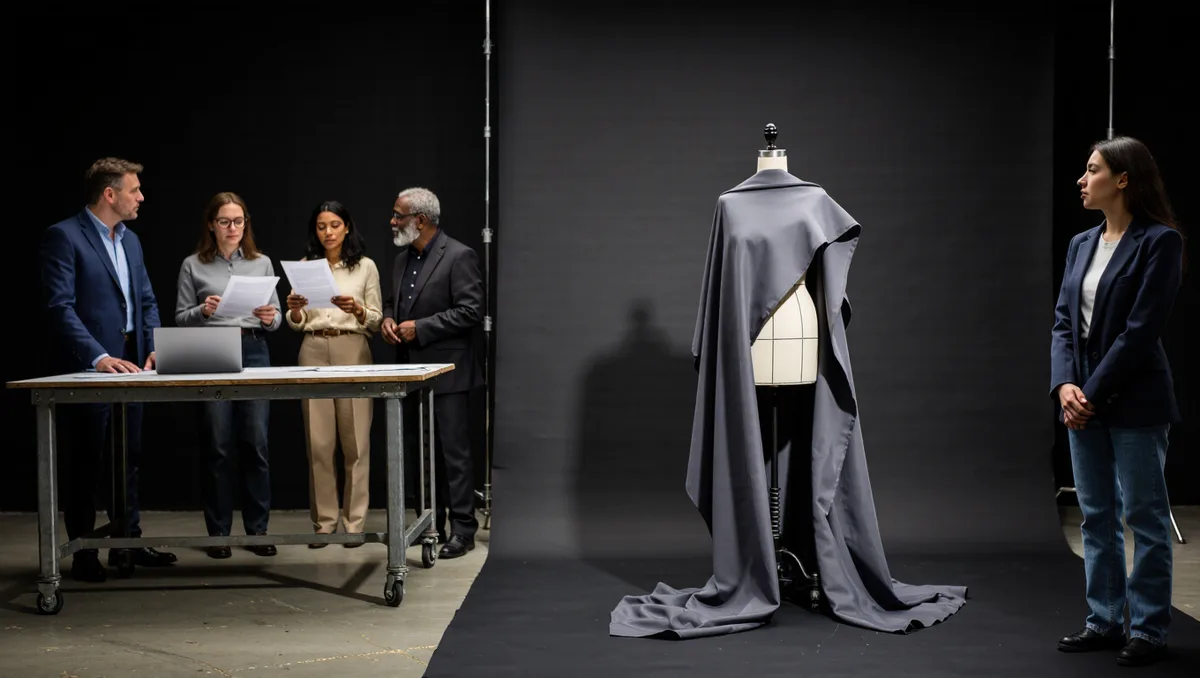
A couture gown is not bought; it is developed. The process runs in a sequence: first a rough toile — a plain-cloth prototype — fitted to the client's body, then the real fabric cut and fitted again, then the finishing passes. Each fitting corrects the last. A client travelling to Paris for the appointments is part of the schedule, and the calendar is set by the gown, not the client.
This is why delivery dates are quoted in months. The gown cannot be finished until the body it is engineered for has been in the room enough times. Rushing the sequence shows in the fit, and the houses guard the sequence because the fit is the product.
How much does couture cost, then?
Our analysis of how the costs stack: the total is set by three variables a client partly controls and one they do not. Fabric choice, level of embroidery and number of fittings are all scale-able — a simpler gown in ordered silk costs less than the same silhouette buried in beadwork. The variable no one controls is the cut. A difficult silhouette costs what it costs, because the hours are fixed by the engineering.
What this means in practice: houses quote privately, per commission, and the figures are not in any catalogue. Trade reporting of couture prices is thin for the same reason — the receipt belongs to the client. Anyone researching couture coverage, from the runway seasons to the houses' own show notes, will find the labour documented in detail and the totals almost never. That gap is not secrecy for its own sake. It is the pricing model: one gown, one client, one negotiated total.
What the evidence establishes — and what stays unknown
The record supports the structure of the price: ordered fabric, separately billed specialist handwork, and a fitting process measured in months, all documented in the houses' and organisers' own materials. What the record does not supply is a published total for a specific gown, and this desk will not invent one.
The useful takeaway is not a figure but a method. When a couture price is discussed, ask which of the three costs is doing the work — the cloth, the hours or the cut. The answer explains the gown better than any number would.