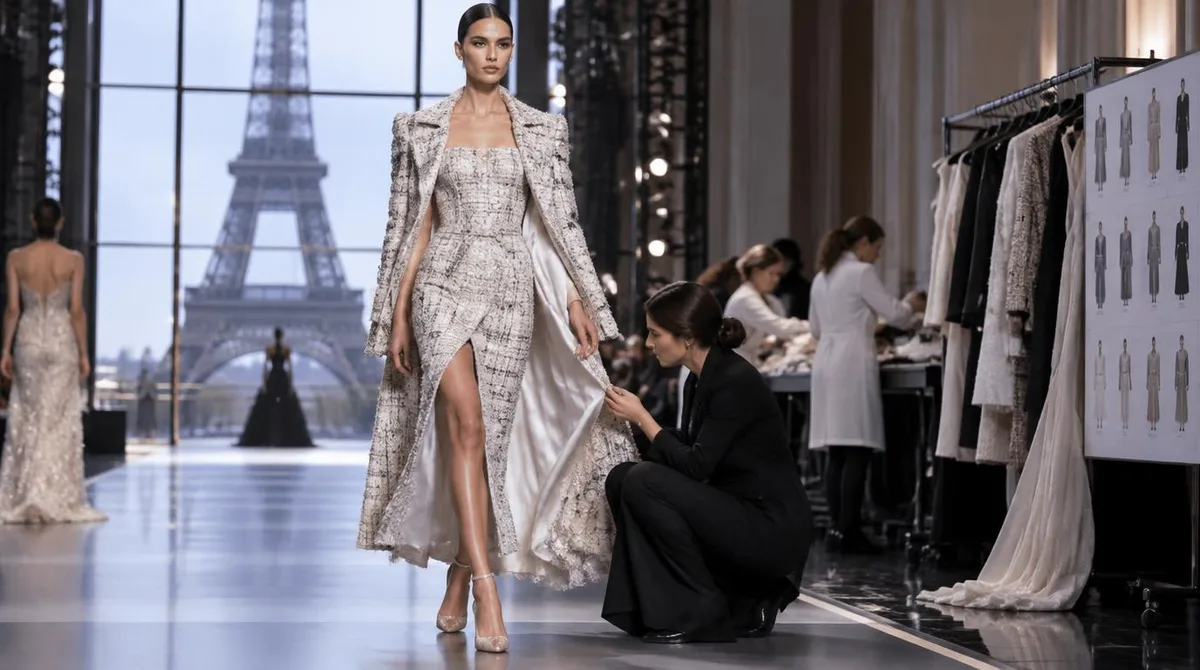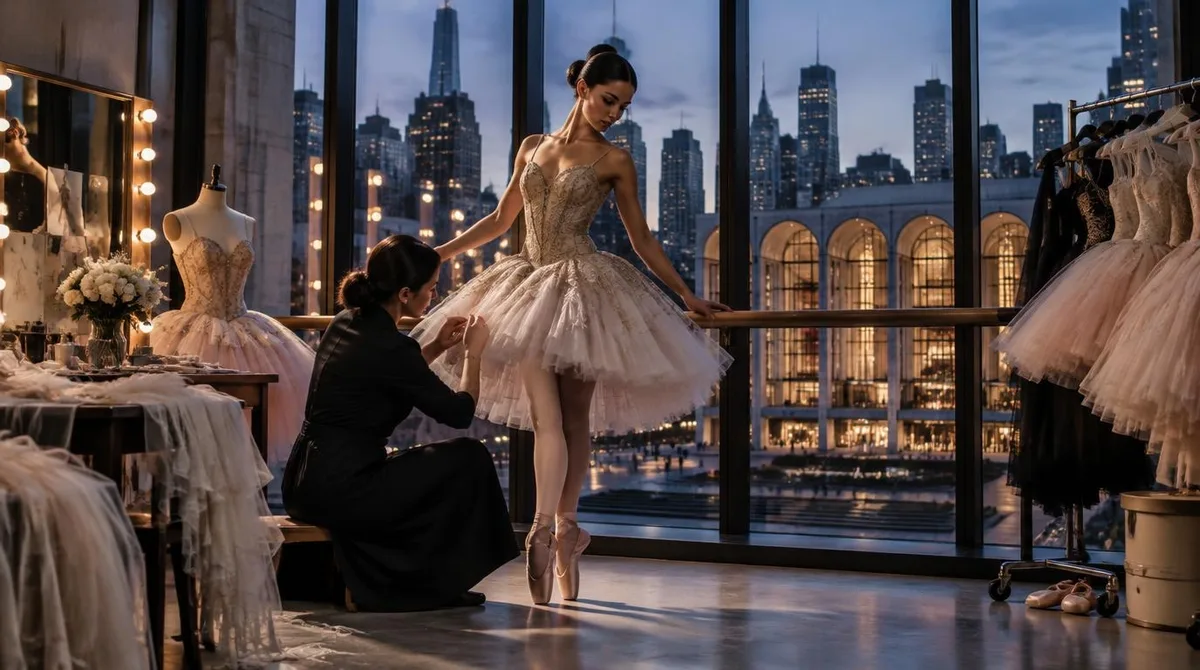
Fashion houses treat the ballet stage as a long-running commission. Sergei Diaghilev's Ballets Russes, which performed in Paris between 1909 and 1929, put Coco Chanel beside Pablo Picasso and Henri Matisse on its costume credits. The habit never closed. Valentino created 25 costumes for the New York City Ballet's fall gala in September 2012.
The reason is craft. A runway look is judged in stills; a stage costume is judged by dancers in motion, night after night. That test turns the ballet credit into a house's demonstration of cutting, fit, and fabric. The record below tracks who commissioned what, and when, per company documents and credited reporting. This connects to our earlier piece, Fashion Show Art Installations: How Fashion Houses Commission Site-Specific Art Installations for Runway Shows.
Why Do Houses Take On Ballet Commissions?
Because the stage tests construction in public. A tutu must survive lifts and turns; a bias-cut skirt must read from the back row. Diaghilev made the point in his commission book, hiring costume designers Léon Bakst, Ivan Bilibin, and Coco Chanel alongside the era's painters, per the encyclopedic record of the company.
For a house, the stage removes the tools a runway relies on. Lighting is theatre lighting, and the audience sits far from the fabric. Construction has to carry the effect alone. That is why costume credits sit in house histories next to couture lines, not behind them.
What Did Chanel Actually Design for the Ballets Russes?
Le Train Bleu, a one-act ballet choreographed by Bronislava Nijinska to a Darius Milhaud score from Jean Cocteau's scenario. Coco Chanel outfitted the cast in sportswear, per the ballet's production record. The work premiered on 20 June 1924 at the Théâtre des Champs-Élysées in Paris, set on the French Riviera with swimmers, tennis players, and weight lifters on stage.
The choice argued a thesis: modern dress, not historical fantasy. Chanel placed the wardrobe of the actual Blue Train passengers onto dancers, and the costume logic matched the fashion house's own sportswear line of the period. One designer, one season, two stages at once.
Why Does the Ballet Credit Travel With Painters?
Because Diaghilev filed couturiers and fine artists on one page. The Ballets Russes roster reads like a gallery list, and the fashion name sits inside it rather than after it: Readers following this should also see Inside Fashion Week's Set-Design Economy, From Louis Vuitton to Miu Miu.
- Coco Chanel - costumes for Le Train Bleu, 1924
- Pablo Picasso - sets and costumes for Parade, El sombrero de tres picos, and Pulcinella
- Henri Matisse - costume design for Le chant du rossignol, 1920
The pairing set a standard. A stage wardrobe could be argued with the same seriousness as a canvas, and the audience for one did not exclude the other. The trade press still reports ballet commissions in exactly these terms today.
How Does Stage Work Read as a Craft Showcase?
By stress conditions, documented. Valentino Garavani created 25 costumes for four pieces for the New York City Ballet's fall gala, including a new ballet choreographed by Peter Martins and one by Christopher Wheeldon, per credited reporting ahead of the September 2012 premiere. Sixteen of those costumes debuted onstage that night.
The scale matters. Twenty-five costumes across four pieces is a couture-size delivery on a stage deadline, with fittings on principal dancers instead of clients. Boning, pleating, stretch, and drape are all documented in motion, and the audience watches the clothes do their job. The atelier gets a public test no campaign shoot can stage.
Conclusion: Why the Credit Keeps Returning
The ballet commission gives a house what no lookbook can: proof of construction under real conditions, in public, with the house name on the credits. From Chanel's sportswear in a 1924 Paris premiere to Valentino's 2012 gala delivery in New York, the line runs unbroken because the stage demonstrates the work. The costume credit rewards exactly what a house sells, and it asks the atelier to prove it eight times a week.