Art movements return to the runway because they carry ready-made visual rules. A grid, a color block, or a printed dot converts to cloth faster than a mood. Yves Saint Laurent proved the point in 1965 with shift dresses built on Piet Mondrian’s compositions, and designers have repeated the move ever since.
This is a working method, and it has a paper trail. Bauhaus functionalism and De Stijl’s grids crossed from gallery wall to garment rack early, and Pop Art prints followed, with the crossings documented in museum and career records. The sections below explain how the transfer works, and why the same movements keep coming back.
What Did Yves Saint Laurent Take From De Stijl?
Saint Laurent took the grid. His career record shows the designer answering the spare Space Age lines of André Courrèges with stark, geometric shift dresses in the 1965 Mondrian collection, then faltering with Pop Art dresses in the autumn 1966 line. One movement gave a structure that cut cleanly into cloth. The other gave only surface, and the record treats the two results very differently. We covered a connected angle in How Fashion Houses Commission Site-Specific Art Installations for Runway Shows.
The source movement was Dutch and strict. De Stijl, founded in 1917 by artists and architects grouped around Theo van Doesburg and Piet Mondrian, pushed a theory called neoplasticism. It held that painting should set aside natural form and natural color. The garment kept the residue: flat planes, black lines, and primary fields. Cloth carries that grammar well.
Why Does Bauhaus Logic Suit Clothing?
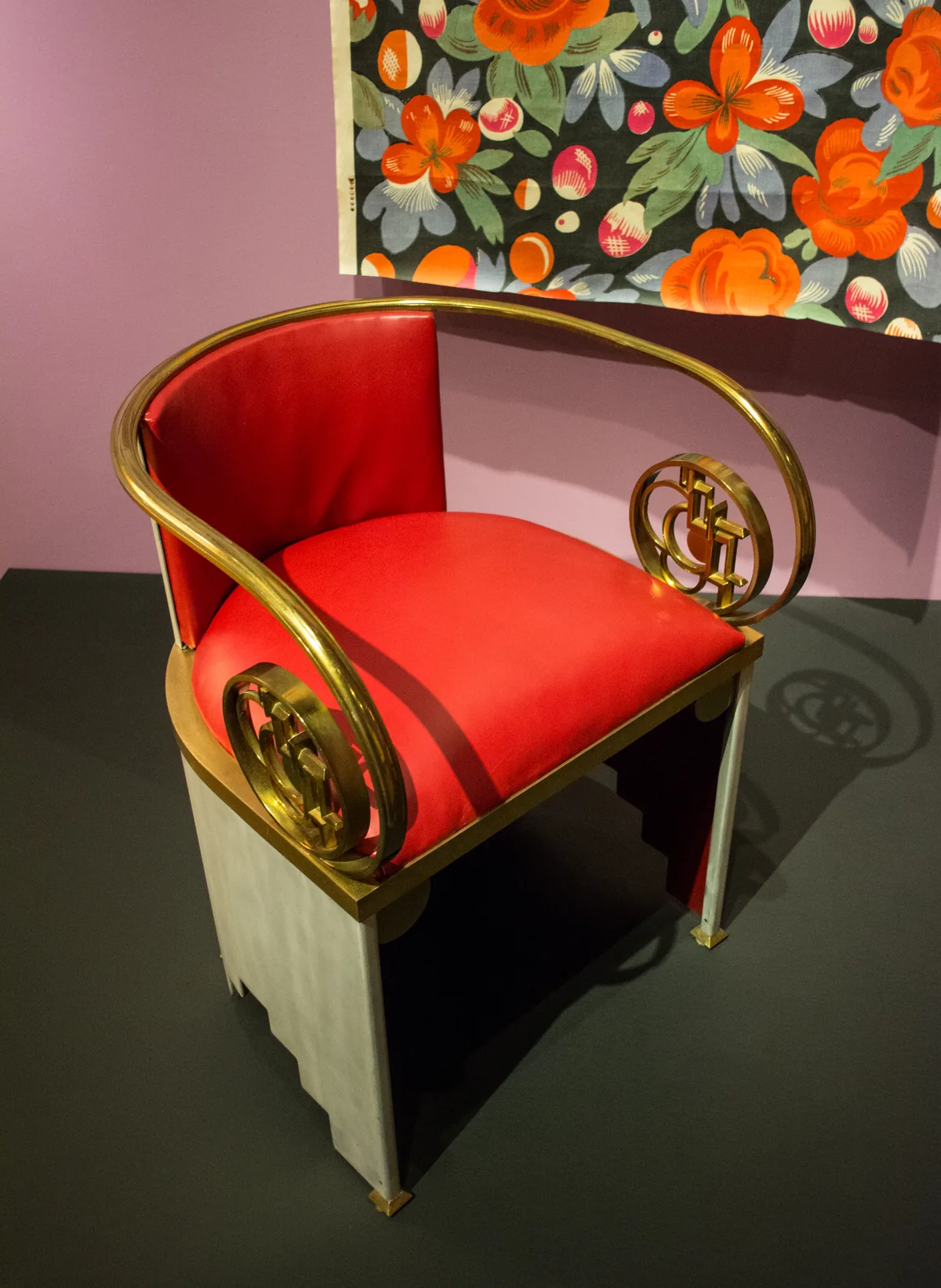
Bauhaus suits clothing because the school tied art to function and to the copy. The German school operated from 1919 to 1933, combined crafts and the fine arts, and pushed an approach that tried to unify artistic vision with mass production. A garment is that exact problem: one body, many copies. The fit between the school’s method and the workshop floor explains a century of borrowings.
Its staffing shows the mix. The roster listed painters such as Paul Klee and Wassily Kandinsky alongside the weaver Gunta Stölzl, per the school’s documented history. Founded by the architect Walter Gropius in Weimar, the Bauhaus left a language of plain geometry and honest structure. Fashion borrows it every time a coat hides ornament and shows construction.
How Does a Painting Become a Garment?
The transfer runs in two moves: structure first, surface second. A designer lifts the composition, meaning where blocks sit and where lines cross, and maps it onto panels, seams, and color-blocking. Surface follows through prints, palettes, and motifs, scaled to the body and repeated across looks.
The record shows the risk as well. The same career documentation that credits the 1965 grid dresses calls the 1966 Pop Art dresses slightly passé. Surface dates quickly; structure survives. That gap is why grid-built garments return to runways more reliably than print-quoting ones, and why studios test a movement’s cut before its imagery.
Why Do the Same Movements Keep Coming Back?
Retrieval, not rediscovery, drives the cycle. Museums certify the material: when the Metropolitan Museum of Art gave Saint Laurent a solo exhibition in 1983, he became the first living fashion designer honored that way, per his career record. A museum stamp pulls a movement back into circulation, and studios answer it with collections that quote the galleries on schedule.
House archives hold the rest. Sketches, swatches, and reference garments let a label quote its own back catalog without guesswork. Anniversaries and retrospectives set the calendar. The loop rewards movements whose rules stay legible on the body, which is the short list the runway keeps redrawing. Readers following this should also see How a Museum Keeps a Runway Dress Alive for a Century.
Conclusion: The Runway Reads the Museum Back
The traffic between gallery and runway runs on shared structure. Movements supply rules a cutter can use, and museums keep those rules visible between seasons. The transfer holds up when it stays honest: geometry becomes seaming, color becomes cloth, and the garment explains the idea on its own terms. Saint Laurent’s grid dresses still make that case six decades on, and the documented record supports the verdict.