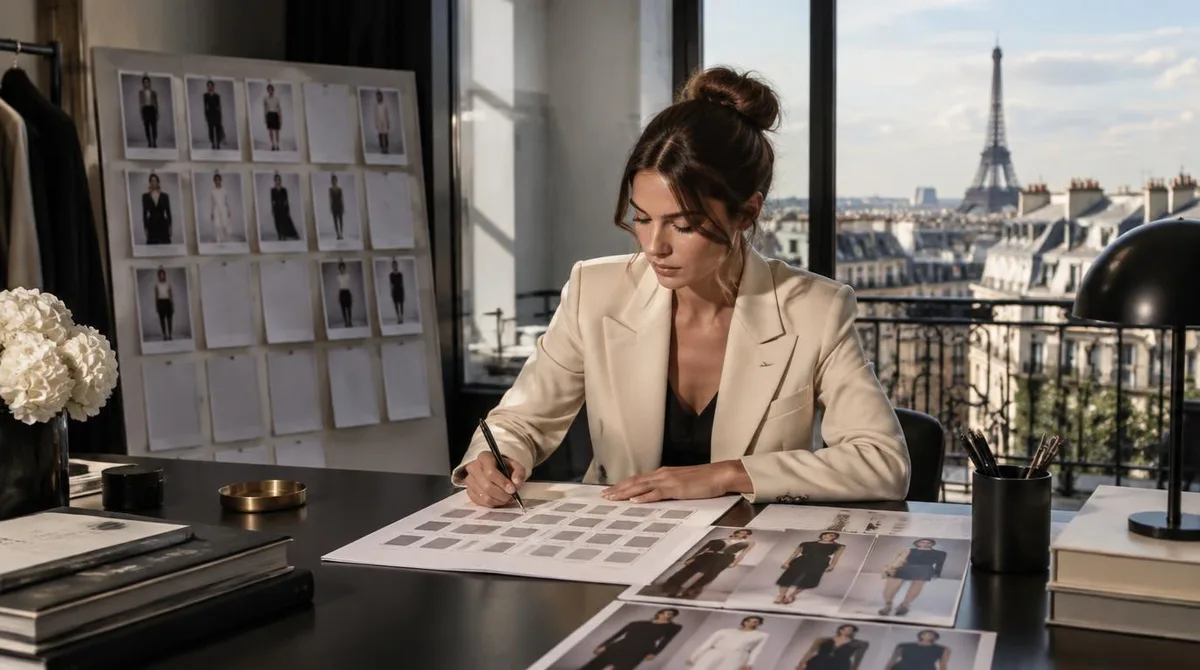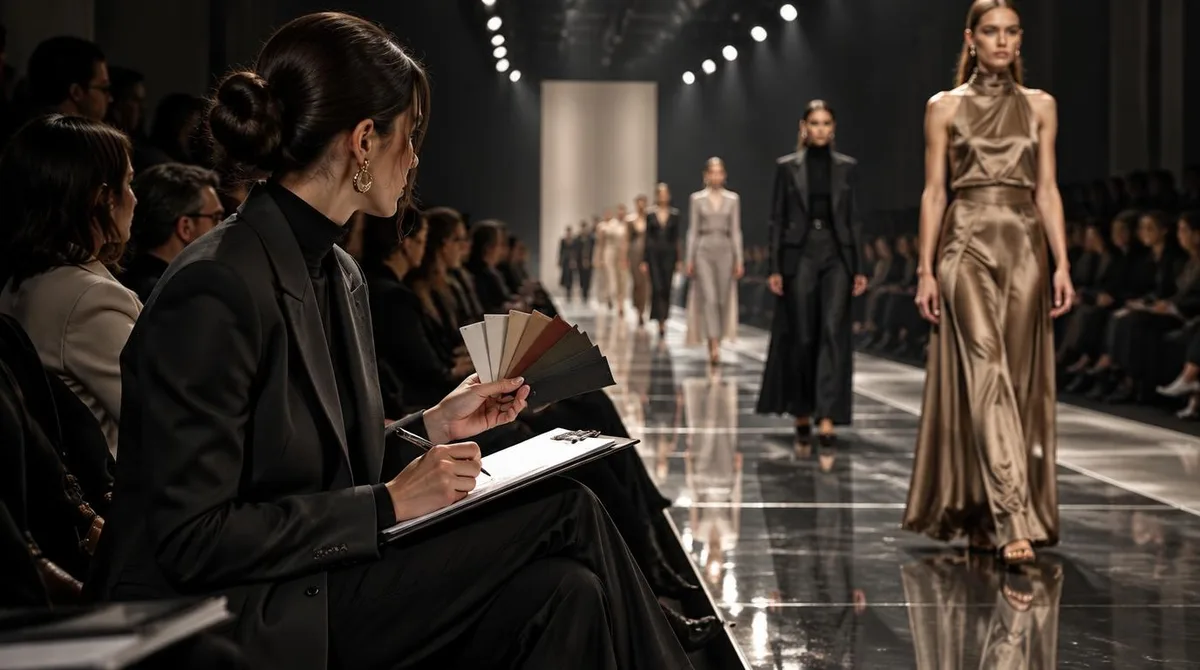
Reading a runway for next season is a counting job, not a guessing one. A forecaster tracks which colors, fabrics, and shapes repeat across a season, per the Wikipedia record on fashion forecasting, and those repeats, not the loudest look, are what reach stores later.
The method fits any show, from a forty-look ready-to-wear run to a small debut. Sort what repeats, sort what is stagecraft, then map the survivors onto clothes a wardrobe can hold. Two reference records carry most of the method: one on forecasting, one on ready-to-wear.
What Does a Runway Season Actually Predict?
Color, fabric, and shape, tracked with a system. A fashion forecaster predicts the colors, patterns, fabrics, textures, prints, graphics, accessories, and footwear that will appear on runways and in stores in coming seasons, per the Wikipedia forecasting entry. That entry splits the work by horizon: short-term forecasting looks one to two years out, and long-term forecasting runs five or more years ahead.
The entry adds a rotation: fashion trends tend to repeat themselves every 20 years. A runway therefore confirms cycles as well as starts them, and a reader who knows the cycle reads with more confidence. Larger companies run their own trend departments for the same reason, following styles, fabrics, and colors for coming seasons. We covered a connected angle in Who Predicts Fashion Two Years Out: Inside the Trend-Forecasting Industry.
Which Details in a Show Signal a Real Trend?
Repetition is the signal. One look is a mood; a shape that returns across a run is a plan. Forecasters scan for exactly that, and the same scan works for any reader, per the forecasting record.
- Count how many looks share one color or color family.
- Track one fabric across separate outfits, not one outfit.
- Watch hems, shoulders, and waist lines for a repeated cut.
- Note shoes and bags, which the forecasting record tracks too.
- Weigh a detail carried by many houses over one loud show.
How Does a Catwalk Look Become a Wardrobe Piece?
Through standard sizes. Ready-to-wear is the trade term for garments sold in finished condition in standardized sizes, per the Wikipedia record, the entry that separates rack clothing from made-to-measure work. Designers intend such clothing to be worn without alteration, because standard sizes fit most people. A runway look translates one element at a time: a color into a coat, or a cut into a trouser.
Fit does the rest. Standard sizes are the contract between a show and a store. Show samples are cut to fixed sizes as well, which is why casting follows the samples, so a reader compares a runway shape against sizes that exist, not against one body.
Which Signals Fade Before Stores Stock the Season?
Stagecraft fades; garment facts travel. Shows sometimes run as installations, with static models in a built set, per the Wikipedia fashion show entry, the record that also names the Big Four weeks: New York City, London, Milan, and Paris. A set or a backdrop belongs to its day. A hemline, a color, or a fabric can survive into a store rack.
The forecasting entry draws the same line in trade terms: short-term work shades into fad forecasting, while long-term work tracks shifts that last for years. The entry's process list runs the same way, from a business vision and a customer profile to a chosen trend, so retail intent sits inside the read from the start. Volume is not proof either, since hundreds of designers show each season and most collections never reach an average consumer, per the same record.
Conclusion: Read the Repeats, Then Map the Sizes
A runway rewards a reader who counts. The forecasting record supplies the categories, the ready-to-wear record supplies the size logic, and the show record separates stage from stock. Track the repeats, map them onto standard sizes, and next season arrives sorted. The method is modest, and the records indicate it is close to how the trade itself reads. Readers following this should also see Fashion Color Palette — The Runway Color Palette: How Houses Decide the Season's Dominant Hues.