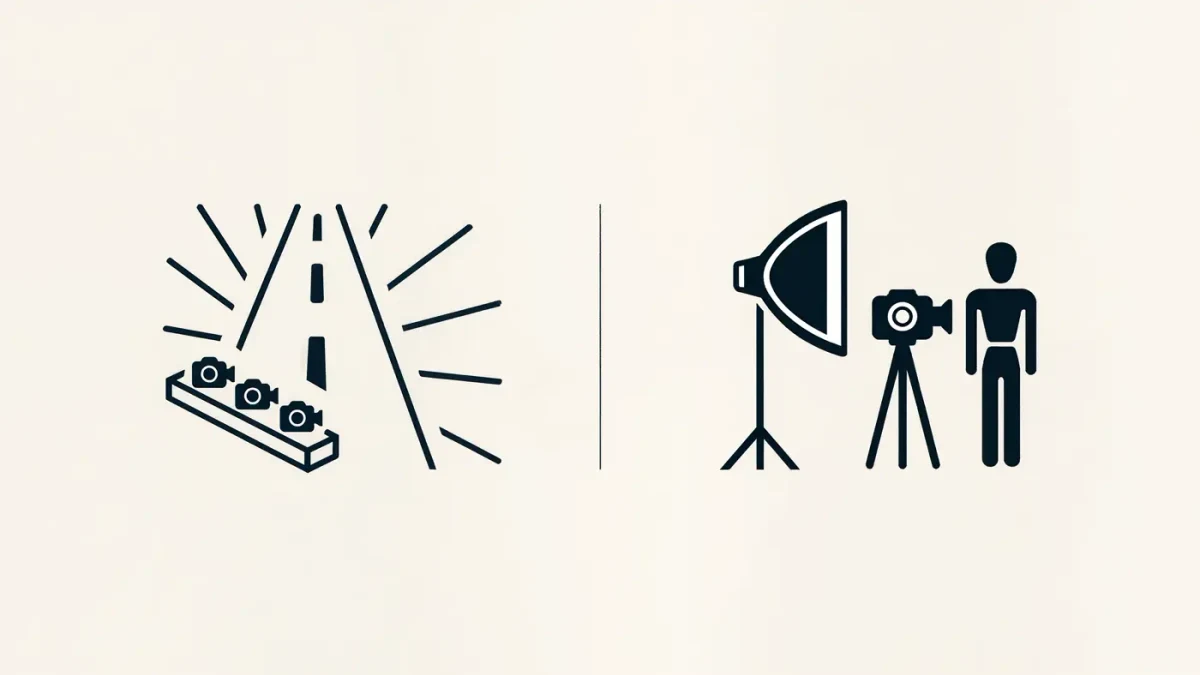
The same collection generates two photographic records with opposite priorities: the show photograph, shot from the pit at distance in whatever light the production built, documents an event in motion; the lookbook, shot later in a studio or location with the sample static and lit for texture, documents the garment as product, per standard practice across house communications. Reviewers, buyers and historians read them differently because each tells the truth the other omits — and the gap between the two images has become part of how a collection's reception is managed.
What does a show photograph actually capture?
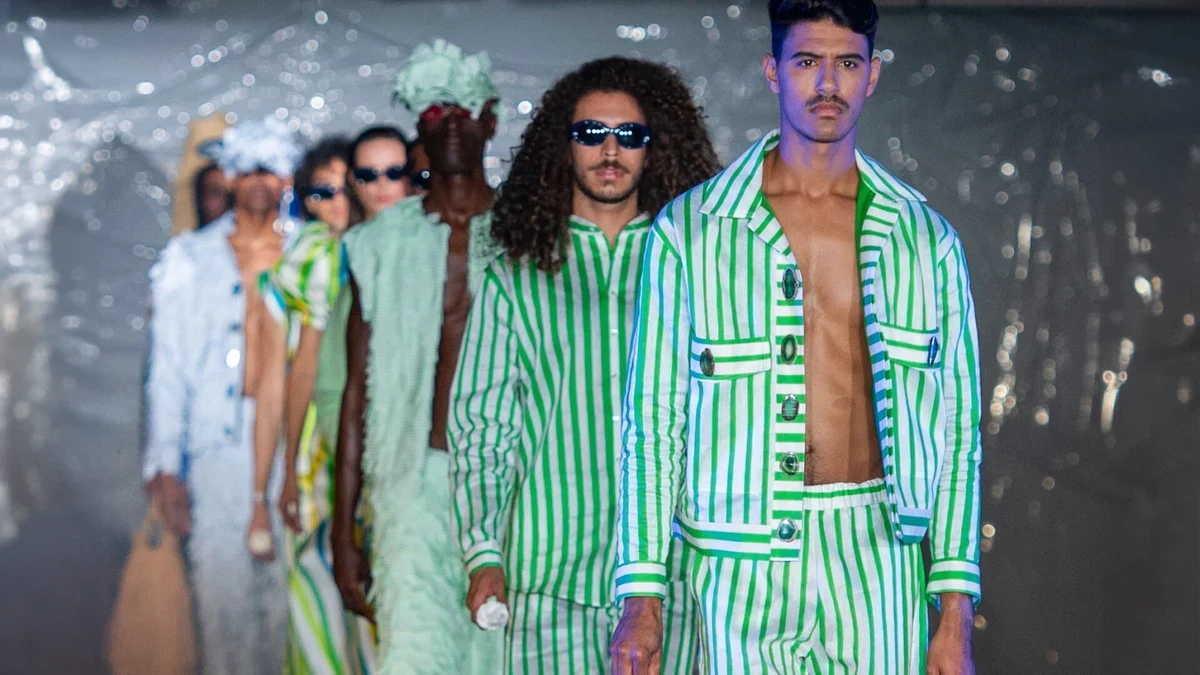
Speed, staging and the audience's eye-level. Pit photographers work from a fixed press riser, at shutter speeds set by a walking body, under lighting designed for the room rather than the camera; the resulting image records how the garment moves — hem flow, fabric weight, the stance the stylist built — compressed into a fraction of a second. That is why wire and trade photography privileges the mid-stride frame: it is the only documentation of behaviour the sample book cannot reproduce. It also inherits the set: the venue's palette and staging appear in every frame, which is why the set-design argument travels through photography rather than through description.
What does the lookbook change?
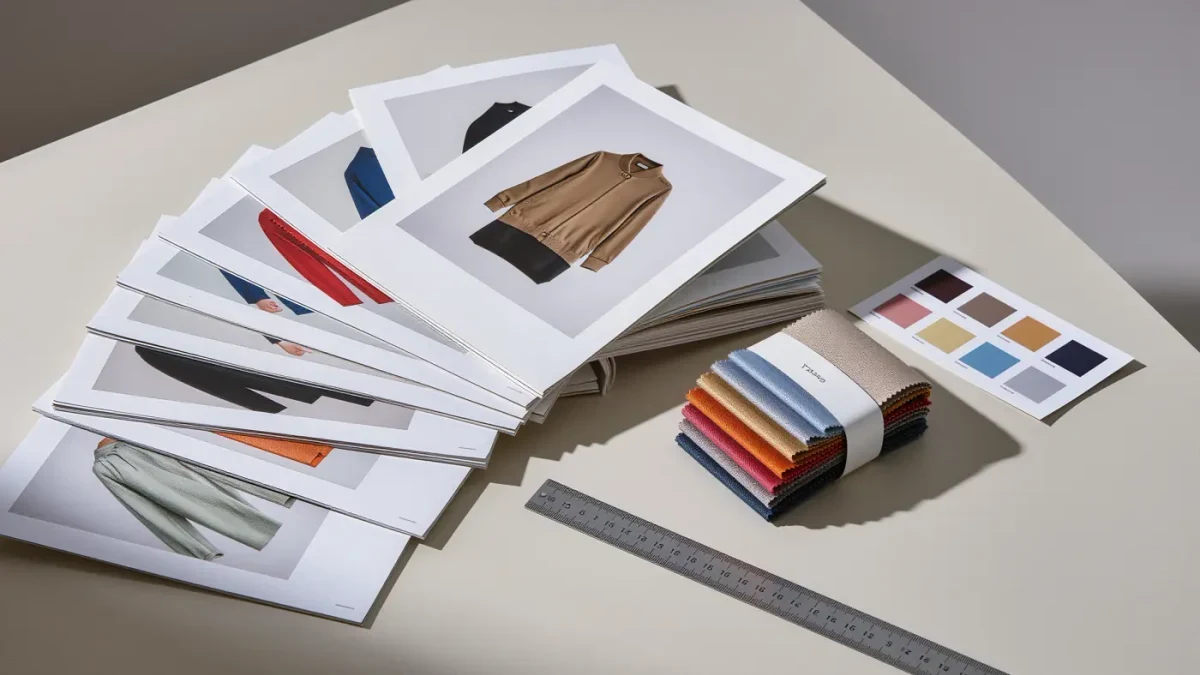
Everything temporal. Shot after the show — or before it, under embargo — the lookbook is a controlled session: one look per frame, static model or mannequin, lighting built to show fabric and construction, full looks and details documented for the archive and the order book. Buyers have historically ordered from lookbooks where show imagery was insufficient; the format's neutrality is the point. The lookbook also fixes the canonical record: when museums, journalists or courts need to know what a collection contained, the lookbook and the credited show imagery together are the evidence base the house maintains.
Why do the two images diverge so far?
Because they serve different clocks. The show photo serves news — it must exist within the hour, filed from the venue, competing in the season's image flood. The lookbook serves the six-month product cycle — it must still be accurate when the garment reaches stores. Houses manage the divergence deliberately: show imagery controls the narrative, lookbooks control the commerce, and campaigns later restate both in the brand's own voice. A collection whose show images flatter but whose lookbook details disappoint will show the gap at order time; the reverse gap shows up in press. Reading both records side by side is the closest a non-attendee can come to having been in the room — which is precisely what the house is selling to history.