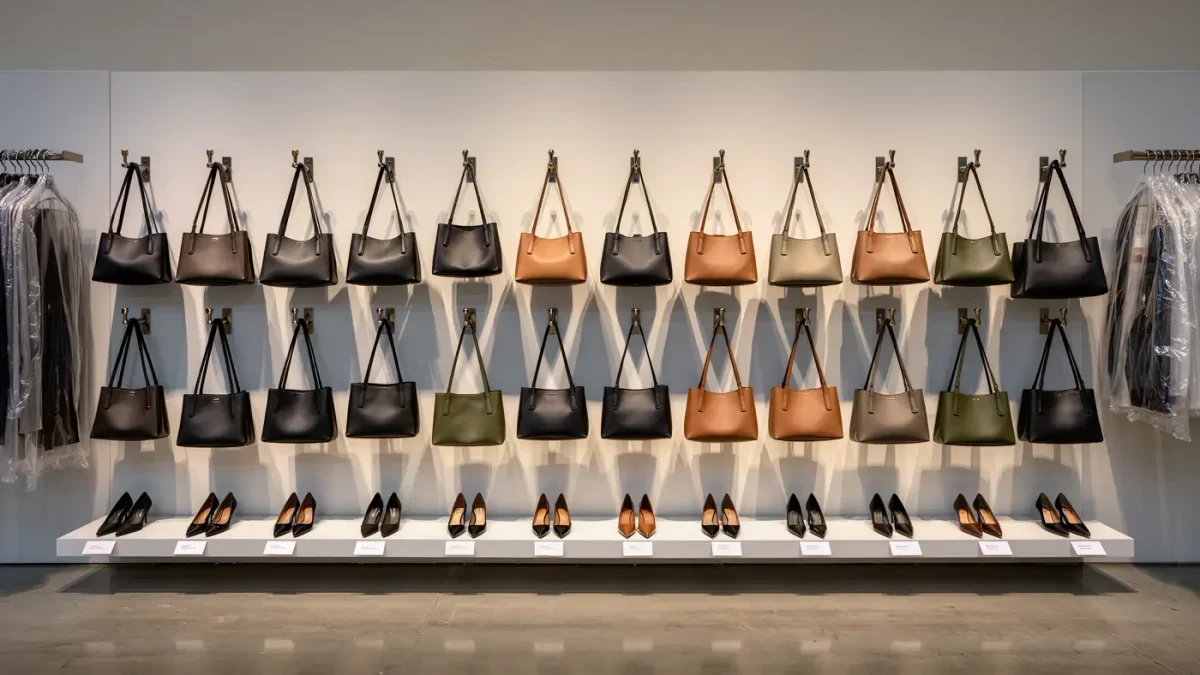
Accessories are the business the runway exists to serve: leather goods and related categories have generated the majority of revenue at most major luxury houses for years — LVMH's fashion and leather goods division alone reported revenues above €41 billion for 2024, per the group's published results, with handbags the engine inside it — and the runway is where the year's bag story is launched. The logic inverts the audience's assumption: the clothes carry the show's artistry, and the accessories carry the show's economics. One hero bag, staged for the cameras, can fund the season's atelier experiments that sell in double digits.
How does the runway stage a hero accessory?
Like a campaign, frame by frame. Stylists place the bag on a specific look — usually early or mid-show, at a walk tempo the photographers can capture — and the look's silhouette is built so the accessory reads: shortened hems for shoes, clean lines at the hip for the bag, open necklines for jewellery. Front-row seating, camera positions and the livestream's cut plan are all known, so the placement is engineered for reproduction: the image the house wants is the image the season's recaps will run. Show notes then name the piece, and the trade's accessory editors file it the same day — the launch sequence is rehearsed like the walk.
Why do bags matter more than dresses commercially?
Scale and sizing. A handbag fits every customer, needs no fitting, carries the house's logo at street level and repeats its cost structure profitably across thousands of units; a couture dress fits one client. That is why the industry's investment logic — store expansions, campaign budgets, even show production — prices accessories as the cash engine, and why creative directors are judged by the bag lines they create as heavily as by their runway reviews. The 'it-bag' phenomenon the trade tracks is not a fashion accident: it is the planned output of this system, one engineered signature per era.
Does the clothing get shortchanged?
Not in craft, in volume. Houses keep the atelier ambitions — the tailoring, the experimental pieces — because they generate the aura that makes a bag worth four figures; reviewers reward the risk, and the risk sells the plain banner product. The system's compromise, visible every season, is deliberate: a runway collection is a portfolio in which a minority of looks push the art and a majority stage the product, and the running order knows which is which. Reading a show with the accessories map in hand is the most accurate way to see what the house is actually selling.