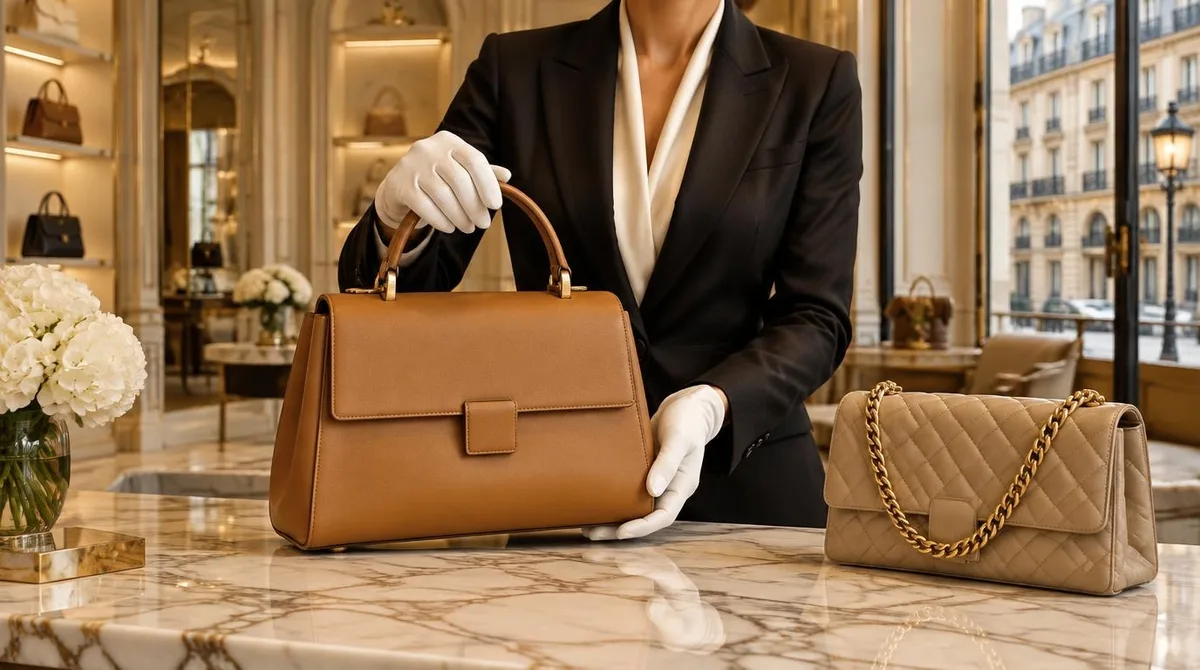
The top 50 luxury bag brands fall into three broad groups: the heritage houses whose icons set the market's prices, the leather specialists who compete on craft rather than logos, and the contemporary labels winning shoppers at lower price points. Knowing which group a brand sits in tells a collector what a bag is likely to hold its value for, and where the market is moving.
The map matters more than usual right now. According to WWD, not a single bag made the top 10 of Lyst's Hottest Product rankings in the first half of 2026, down from seven spots in 2023 — a sign that the classic "It" bag is losing its grip as the category's single cultural anchor. Bag desire, the report notes, is fragmenting toward more personal choices.
At the same time, price has become the category's central tension. A medium Chanel classic flap bag that retailed around $5,800 in 2019 now sells for about $11,700, and the Louis Vuitton Neverfull has roughly tripled since its 2007 debut, according to Vogue — figures that explain why collectors are looking harder at the names further down this list. For context on how houses build the reputations behind these prices, see our guide to how houses earn their names.
How is a list of luxury bag brands organized?
This list groups brands by what they compete on, not by ranking. The heritage houses compete on icons and resale recognition. The leather specialists compete on construction, hardware and discretion. The contemporary tier competes on design and price. A collector's shortlist usually draws from all three — the icons for value retention, the specialists for craft, the contemporary names for wear-now cost per use. Readers following this should also see About Luxury Brands: How Houses Earn Their Names.
No ranking is implied. The order within each group is roughly by market prominence, and the groups overlap: several houses appear in more than one conversation depending on the bag.
Which heritage houses define the luxury bag market?
These fifteen names set the reference prices and the silhouettes everyone else is measured against. Their icons — the flap bag, the Birkin, the Lady Dior — are the pieces analysts cite when they discuss the category's health.
- Hermès — the Birkin and Kelly, made in France by artisans and sold under strict purchase allocation
- Chanel — the classic flap bag with the chain-and-leather strap, repriced repeatedly this decade
- Louis Vuitton — monogram canvas icons like the Neverfull and Speedy
- Dior — the Lady Dior and, more recently, early Jonathan Anderson designs such as Le Cigale
- Gucci — the Jackie, the Bamboo 1947, and a newer accessible push under the Generation Gucci line
- Prada — the nylon Re-Edition line and structured leather totes
- Fendi — the Baguette, a silhouette that named a category
- Celine — the Triomphe and the Box bag, favored for quiet branding
- Loewe — the Puzzle and Hammock, construction-led designs under a craft-focused creative direction
- Bottega Veneta — intrecciato woven leather with no visible logo
- Saint Laurent — the Niki and the Sac de Jour, recently refreshed with new design leadership
- Givenchy — the Antigona, with new creative input arriving this year
- Balenciaga — the City and Le Cagole, the house's streetwear-era contributions
- Ferragamo — the Gancini hardware and structured top handles
- Miu Miu — Prada's younger sister label, with matelassé and buckled styles
Which leather specialists compete on craft, not logos?
This is the tier collectors reach for when they want construction and discretion. Most are older than they look, several predate the heritage houses' bag empires, and most sell without splashy marketing.
- Delvaux — Belgium's house, credited with the oldest documented luxury handbag, the Brillant
- Goyard — the painted Goyardine canvas, sold with minimal advertising and scarce distribution
- Moynat — Parisian trunk-making heritage and the Réjane, named for a Belle Époque actress
- Valextra — Milanese minimalism, with the signature green-lined Iside
- Serapian — Milanese weaving techniques and a family firm lineage
- Mark Cross — the American house revived around its boxy Grace bag
- Loro Piana — known for textiles first, its leather totes follow the same quiet register
- Gabriela Hearst — structured, named styles made with a sustainability brief
- Alaïa — the house's sculptural leather pieces carry the founder's cut-first logic
- Byredo — a fragrance house whose leather goods lean on pared-back hardware
- Longchamp — the Le Pliage nylon fold, the category's most accessible icon
- Fauré Le Page — the Parisian house whose calibre-print canvas borrows from its gunmaking past
Which contemporary brands are reshaping the market?
This is where the growth is. Data cited by WWD from the wholesale platform Joor shows the share of handbag units sold at $1,000 or more falling from 6.1 percent in the first half of 2022 to 2.5 percent in the first half of 2026, while the under-$250 bracket grew from 15.8 percent to 22.3 percent of units. These names sit in the gap between the two.
- Polène — Paris-based, sculptural leather at entry-luxury prices
- Toteme — Stockholm minimalism, bags designed to match the house's uniform dressing
- Elleme — Parisian, soft structured totes in muted leathers
- Strathberry — Edinburgh, known for the bar-across handle detail
- DeMellier — London, structured mid-size bags with a philanthropy tie-in
- Staud — Los Angeles, playful shapes at the accessible end
- Coach — the legacy American brand, cited by analysts as a trade-down winner with quarterly sales up 14 percent
- Tory Burch — the American label's Kira and Ella lines
- Kate Spade — accessible New York preppy codes
- Mansur Gavriel — the bucket bag that prefigured the quiet-luxury wave
- Cuyana — the lean, few-better-things wardrobe argument
- Telfar — the shopping bag that turned accessibility into a status signal
- Khaite — New York luxury, the Amelia bag with its soft crescent line
- The Row — the Margaux, luxury pricing with no logo at all
- Lemaire — Paris, the Croissant bag shaped like its name
- Jacquemus — the Le Bambino, scaled-down and social-first
- Yuzefi — London, hardware-led design
- Wandler — Amsterdam, architectural top handles
- Chloé — the Marcie and the Paddington, bohemian codes inside a heritage house
- Mulberry — the British house and the Bayswater
- Anya Hindmarch — London, playful personalization and the Eyes tote
- Aspinal of London — British croc-effect leather at accessible prices
- Roger Vivier — the Parisian house whose Pilgrim buckle carries into its bags
What does this mean for collectors right now?
Our analysis: the pricing environment has changed the calculus for every tier on this list. According to Vogue, HSBC puts the average price increase for personal luxury goods at 52 percent between 2019 and 2024, and analysts at Bernstein spotted Gucci quietly cutting the price of its Mercato tote by an estimated 20 to 25 percent this year — a signal that even the biggest houses are rethinking what aspirational shoppers will pay.
The consequences cut in the collector's favor in two places. First, the contemporary tier: WWD's reporting quotes recruitment consultant Mary Gallagher naming Polène, Toteme, Elleme, Strathberry, DeMellier and Staud as makers of "smart, chic investment pieces at a fraction of the cost of established luxury." Second, resale: the same report notes that buying secondhand has become a point of pride even among full-price shoppers, which widens access to the heritage icons without paying current retail. Our coverage of how resale rewired fashion coverage follows that shift in detail. We covered a connected angle in Luxury Resale Market Growth: How Resale Rewired What Fashion News Covers.
The risk sits with the icons themselves. As the Vogue report explains, houses find it nearly impossible to cut the price of a bag as well known as the Chanel double flap without undermining its value — so those prices tend only to move up. A collector buying an icon today is buying at the top of a long repricing curve; a collector buying a specialist or contemporary piece is buying where the market's growth actually is.
The takeaway for a new collector
Build the list around function, not fame. One heritage icon covers recognition and resale. One leather specialist covers craft and daily wear. One or two contemporary names cover trend-adjacent style at a price that forgives itself. The 50 brands above are enough to fill all three slots for a lifetime — and in a market where desire is fragmenting, the personal pick increasingly outperforms the obvious one.