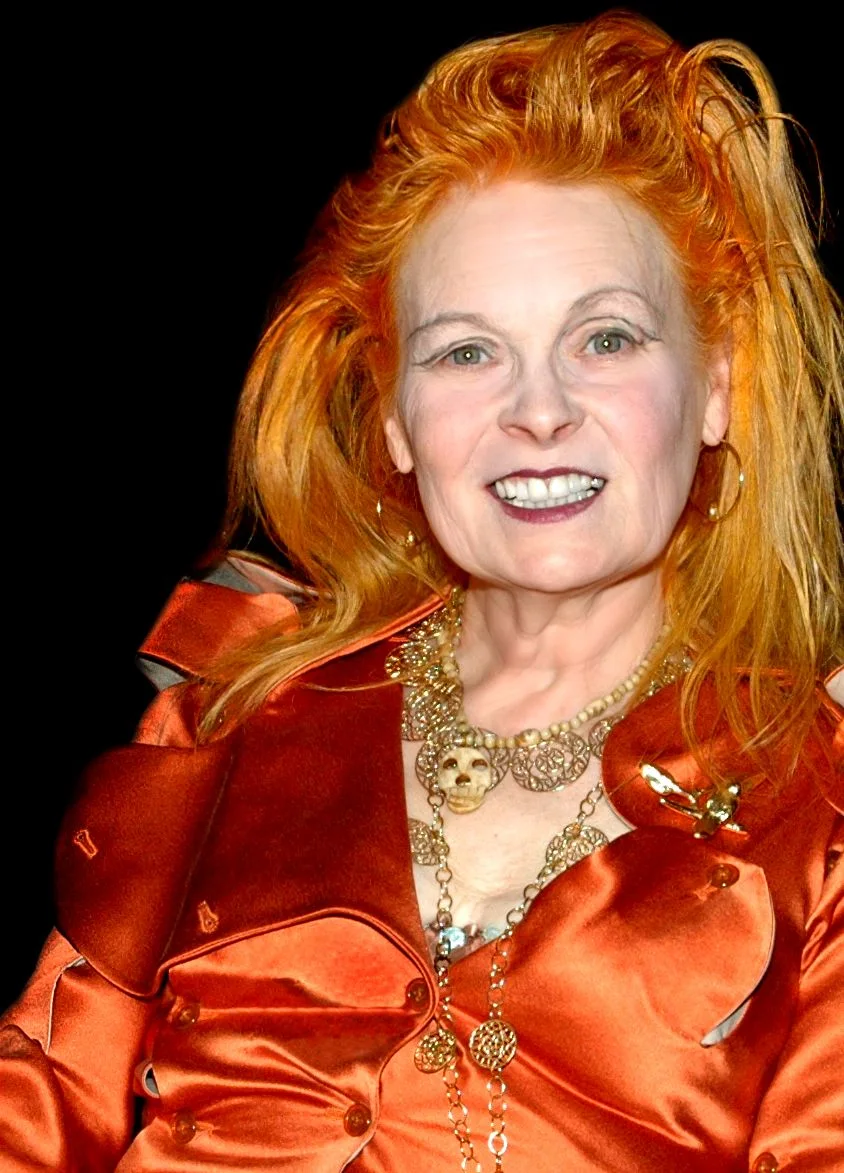
Vivienne Westwood, who died in London in December 2022 at 81, built one of British fashion's defining houses from a circuit that began on the King's Road: a shop she ran with Malcolm McLaren through its successive incarnations in the early and mid-1970s became the wardrobe of punk, and her first proper runway collection, the Pirates show of 1981, announced the historical method — borrowing, recutting and re-politicizing the dress of past centuries — that the house has run on since, per the documented chronology in the Victoria and Albert Museum's collections and her published biography. Trained as a primary-school teacher before fashion, she remained to the end the trade's most explicit arguer: fashion as a medium for politics, feminism and climate.
How did punk become a design method?
Through the shop, then past it. The King's Road boutique — 'Too Fast to Live, Too Young to Die', then 'Sex', then 'Seditionaries' — sold Westwood's and McLaren's deliberately provocative garments to the scene that became punk, per museum documentation of the shop's history. But Westwood's move beyond it was the substantive act: the 1981 Pirates collection took the bricolage instinct — cut-up history, misuse as homage — and executed it with real tailoring skill, launching the New Romantic look and her runway career together. The shop's provocation became a discipline: take a garment loaded with class or imperial meaning, recut it, and make its history visible.
What are the signature arguments?
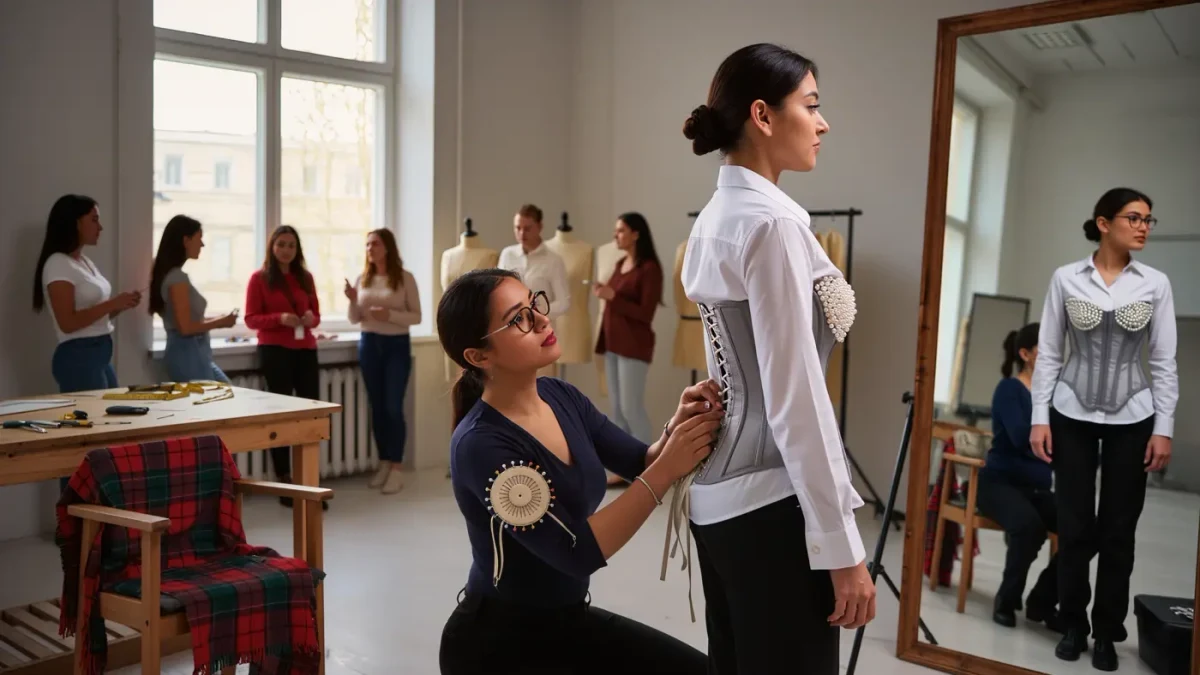
The corset is the canonical case. Westwood's 1987 Harris Tweed collection sent the corset — a garment feminism had catalogued as oppression — down the runway worn as outerwear, repositioned by a woman designer as a symbol of power chosen rather than imposed; the mini-crini did the same work for the skirt. The collections' research base widened from there: historical cutting, the 18th and 19th centuries, tartan and tweed as class documents. Museums have treated the work accordingly — the V&A's 2004 retrospective 'Vivienne Westwood' was among the museum's most successful fashion exhibitions, per the museum's records — and her 1992 OBE, later raised to Dame Commander in 2006, formalized establishment recognition of an anti-establishment career.
What does the house carry forward?
The activism, formally. Westwood's late decades were organized around climate campaigning as much as design, and the house institutionalized it: manifestos in show notes, collections themed on environmental arguments, and her stated position — 'buy less, choose well, make it last' — adopted as the brand's public line, per the house's published materials. The company remains independently controlled by the family, an ownership fact that has kept the house's activism unmediated by a group.
Design history's accounting is settled: Westwood proved that a collection could be an essay — researched, argued and worn — and that an outsider with a teacher's training and a punk's methods could change what the establishment collects.