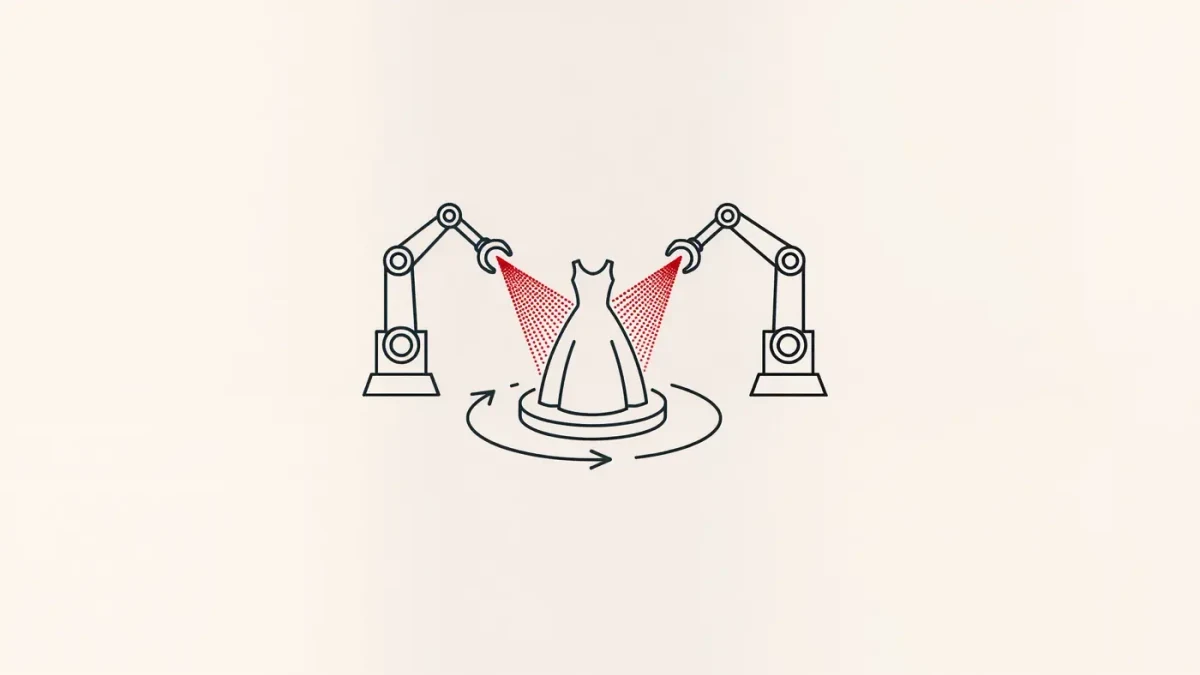
Alexander McQueen's No. 13 show, staged in London for spring 1999, ended with a single image that outlived the season: the model Shalom Harlow standing on a rotating platform in a strapless white dress while two industrial robotic arms — the kind used in car plants — sprayed black and yellow-green paint onto the fabric as it spun, per the show's documented staging and film record. The dress was finished by the machine in front of the audience; no two readings of the collection ignore those final minutes. It is the most cited example in fashion's argument that a show can be a work of performance art rather than a commercial presentation.
What was the collection actually about?
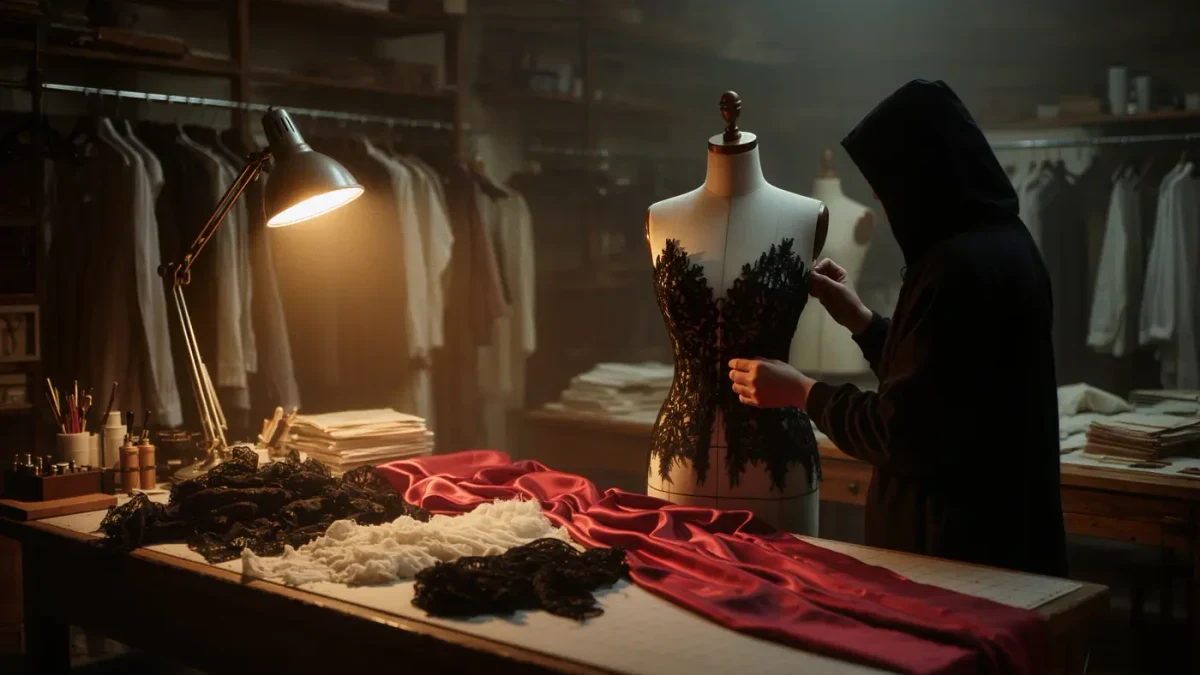
Craft versus machine — stated, then enacted. No. 13 opened with McQueen's most accomplished tailoring and handwork to that date, including a ensemble of hand-cut and smocked pieces that demonstrated his atelier training on Savile Row and in couture workrooms. The robots' finale set that handcraft against industrial automation: the audience watched precision machinery treat a couture-standard garment as a blank canvas. McQueen, who trained as a tailor before founding his label in 1992, staged the tension rather than explaining it — the sequence runs without narration and needs none.
Why does it still get cited?
Because the staging solved a problem criticism usually only describes. Reviews could say a collection was 'about' the clash of craft and industry; No. 13 made the clash literal, in real time, with a garment physically altered by the end of the show. The piece entered the museum canon through the Costume Institute's 2011 retrospective 'Alexander McQueen: Savage Beauty', which drew roughly 660,000 visitors — then the Met's most-visited costume exhibition, per the museum's attendance records — and the finale film is a fixture of design curricula.
The show also fixed a template others have borrowed: the finale as event, the set as mechanism, the body as site. McQueen followed it with further engineered spectacles — the chessboard show of autumn 2005 and the holographic finale of autumn 2006 — but No. 13 remains the reference point because the technology threatened the object rather than decorating it.
Where does the show sit between fashion and art?
Precisely on the border, and deliberately so. McQueen insisted he was a fashion designer, not an artist; the collections were sold, and the spectacle served the clothes' narrative. Yet No. 13 was conceived, staged and documented the way performance art is — a unique event whose record, not whose inventory, carries the work to later audiences. Museums have collected the painted dress as an artwork of the show's own making: the garment is both a production sample and the evidence of a performance that no longer exists.
The durable lesson for the runway is structural. A show earns the word 'art' not through expense but through a staged idea the audience can witness happening — which is why, a quarter-century on, No. 13 is still the standard the engineered finale is measured against.