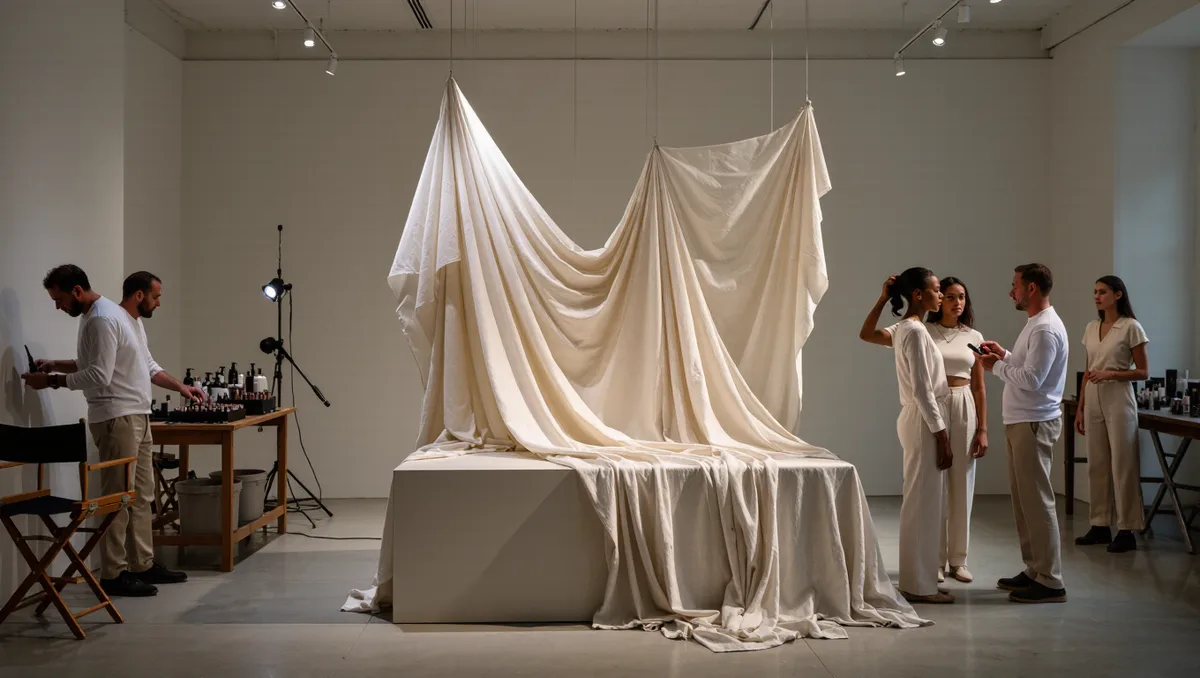
A fashion show production company takes a house's idea for a show and turns it into something that can physically run: a venue built to spec, a runway set on time, lighting, sound, seating, rehearsals, and a crew that knows how to fix a failure before the first model steps out. The designer and the creative studio decide what the show should say. The production company decides how it gets said without the lights failing.
The word itself is doing quiet work here. As Dictionary.com defines it, production is "the organization and presentation of a dramatic entertainment" — and that is precisely the job. A runway show is an entertainment with a hard start time, a live audience and one chance to get it right. This explainer walks through what these firms actually do, in what order, and why certain houses rebook the same production partners season after season.
What does a production company do before anyone builds anything?
The work starts with conversations, not construction. The production team sits with the house's creative director and show producer to understand the collection's mood, the expected number of looks, and the casting plan. From that brief they produce a technical design: where the runway runs, how many rows of seating fit, where the cameras and lighting positions sit, and how guests enter and exit.
Then comes the budget and the schedule. Every element — the set, the sound system, the lighting rig, the venue, the labor — gets costed and sequenced. A show that opens in eight weeks needs a build calendar that works backward from the first rehearsal. If the venue is a landmark building rather than a purpose-built space, the production company also coordinates with the building's own engineers, insurers and local authorities. That paperwork phase is unglamorous, and it is where most shows are actually won or lost.
What happens during the venue build?
The build is the most visible part of the job. Crews transform an empty hall, a gallery, a parking structure or a tent into a runway venue, often in a matter of days. Sets are fabricated off-site, trucked in, and assembled. Flooring goes down so heels do not catch. Seating risers are built and numbered. Lighting rigs are hung and focused, and sound systems are tuned to the room's acoustics.
Our analysis: the build is where a production company earns its fee, because it absorbs the risk. A set that arrives damaged, a floor that flexes, a power draw that trips a breaker — the production firm owns each of those problems, and its reputation rests on the audience never learning they existed. Houses that stage ambitious debuts lean on this expertise heavily; readers can see how that plays out at the top of the calendar in our piece on how a house stages a creative director's debut.
Who runs the show on the day itself?
Show day belongs to the technical director and the stage manager. The technical director calls the lighting and sound cues from the control desk, following a rehearsal plan agreed with the creative team. The stage manager keeps the backstage sequence moving: models lined up in walk order, dressers standing by, the next look ready as the current one finishes its walk.
The production company also manages the guest-facing layer. Front-of-house staff seat the audience, manage late arrivals, and handle the standby list. Ushers, security and the seating chart all come from the production plan, not from the house's communications team. The house controls who sits where — our explainer on who sits in the front row, and why covers that side — but the production firm is what makes the seating physically happen.
Why do houses rebook the same production firms?
Trust compounds. A production company that has run a house's shows for several seasons already knows the creative director's visual language, the house's preferred venues, its lighting palette and its rehearsal rhythm. That institutional memory shortens every planning cycle and reduces the number of new failure points a season introduces.
There is also a practical reason: the largest production firms hold the relationships — with rigging companies, set fabricators, venue managers and city officials — that a one-off show cannot build in time. Rebooking is not sentiment. It is a house buying certainty at the one moment in the season when nothing can be taken twice.
That said, houses do change production partners, usually when a new creative director wants a different scale of show, or when the venue strategy shifts. A move from a traditional runway to a presentation format, for example, changes the technical requirements entirely; the differences between the two formats are laid out in our guide to presentation versus runway show.
What this means for how you watch a show
Once you know what a production company does, the show reads differently. The runway's length and height, the pace of the lighting changes, the moment the soundtrack drops out and comes back — these are production decisions, made by people whose names never appear in the collection reviews. The set in particular is a collaboration: the concept belongs to the studio, the execution belongs to the production firm, and our piece on how show design started meaning something traces that partnership.
It also explains the clock. Shows start late for many reasons, but a production company's job is to make sure the delay is never theirs — the rig focused, the sound checked, the runway swept before the first guest sits down. The next time a show opens smoothly, the credit belongs as much to the crew at the control desk as to anyone whose name is on the invitation.
The takeaways
The evidence base for this job description is deliberately general, because the firms themselves publish little. What is well documented is the shape of the work: pre-production planning and budgeting, venue coordination, set fabrication and build, lighting and sound design, show-day technical direction, and front-of-house management. Houses rebook production partners because that knowledge is hard to replace and the cost of replacing it is a failed show.
For readers who want to see the results without a ticket, the season's shows are increasingly streamed; our guide to watching fashion shows from your sofa covers how to follow a season from home. And for the broader calendar context — where each show sits in the season — see our explainer on how a show gets a fashion week slot. For related coverage, see Who Sets the Fashion Week Calendar, and How a Show Gets a Slot.