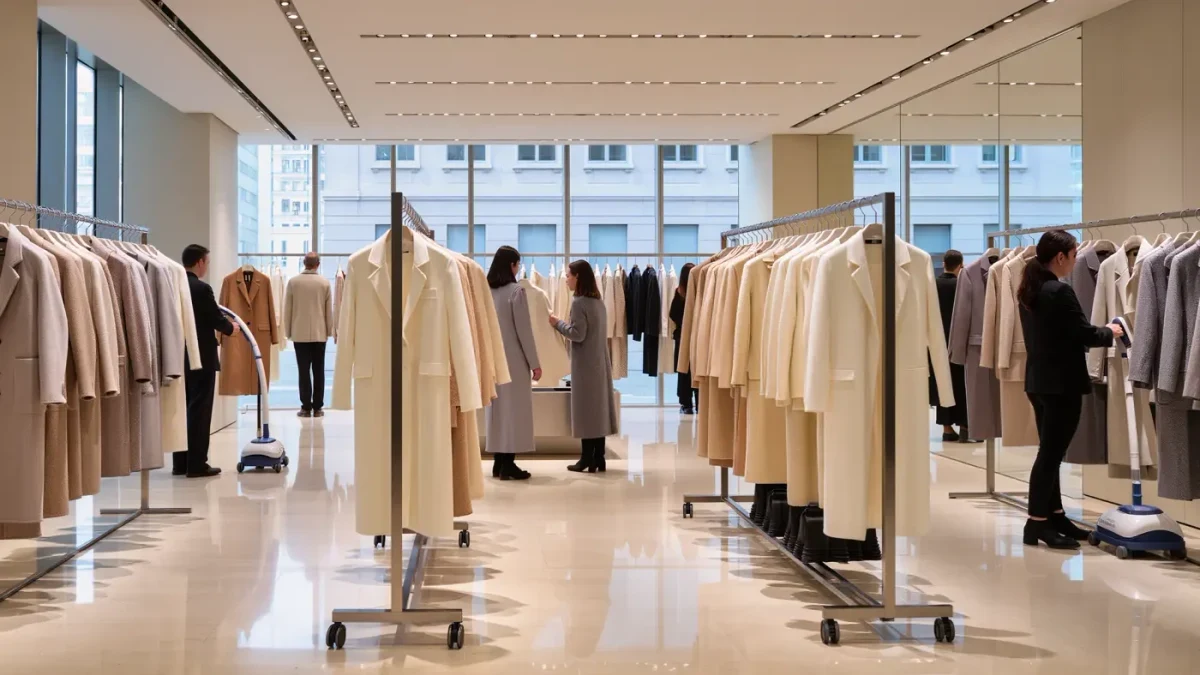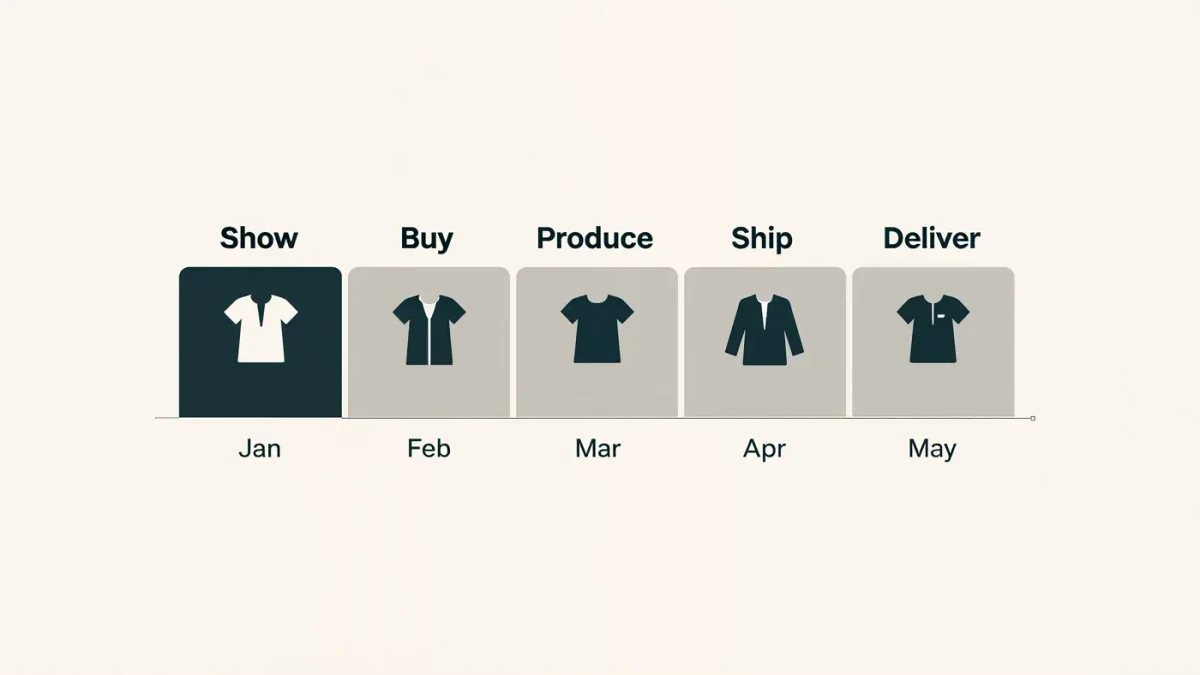
The standard runway-to-retail lead time in ready-to-wear is roughly six months: a collection shown in September is bought by stores in the days after the show, produced in quantity through the autumn, and delivered to the floor around February, per the traditional wholesale calendar the luxury industry still runs on. That lag is why a trend's runway moment and its moment on the street are two different seasons of the same idea. The pipeline between them is a deliberately built machine.
This is a structural explainer, not shopping guidance; the site publishes information, not purchasing advice.
What happens in the first week after a show?
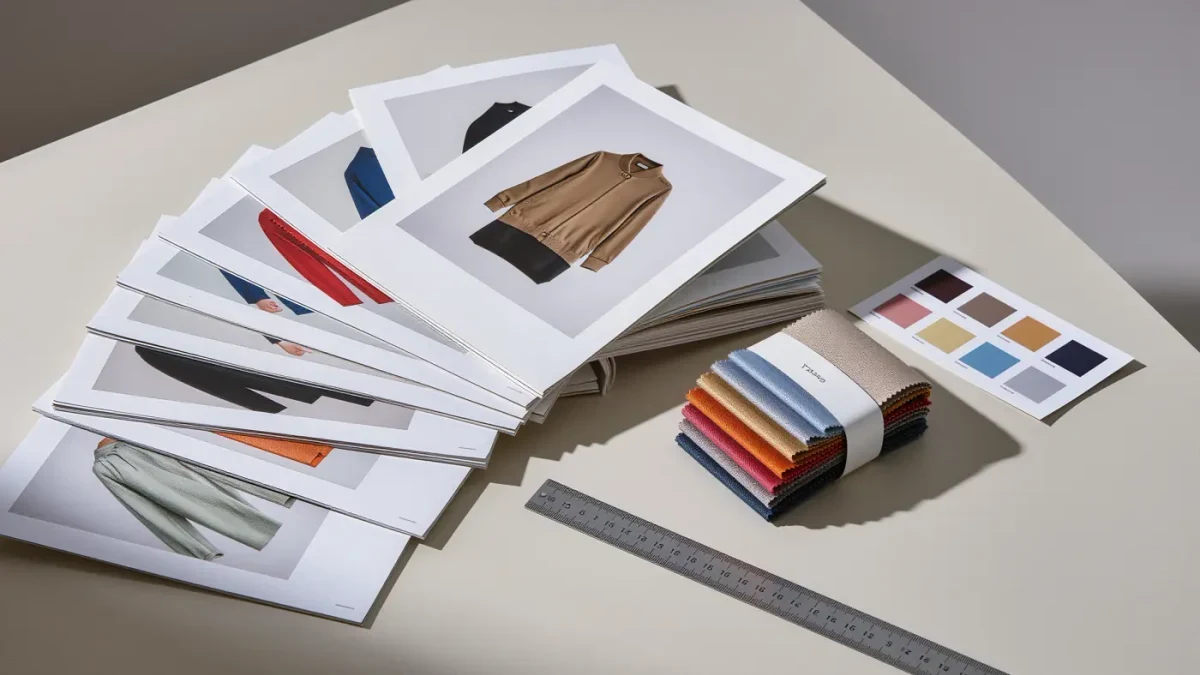
Buying. Retail buyers from department and specialty stores attend or review the collection and place orders against samples, choosing sizes, colours and looks for their market. These orders, not public applause, decide what a collection actually becomes: a look that photographs well but sells no units will not survive the buy. Press coverage runs in parallel and shapes demand, but the wholesale order book is the first hard verdict.
Why does production take so long?
Because runway samples are single garments cut for the show, usually in one size. Converting a sample into a sellable product means grading the pattern across sizes, sourcing fabric in bulk, negotiating with mills whose calendars run seasons ahead, cutting, sewing and finishing at factory scale, then shipping and distributing. Luxury houses add quality gates and finishing work that fast supply chains skip. Six months is not slowness; it is the price of the standard wholesale model, under which stores commit to inventory long before customers see it.
How do copies arrive so much faster?
Vertically integrated fast-fashion producers compress the same chain to weeks. Zara, the model most often cited, is documented moving a design from sketch to store in roughly two to three weeks when needed, per the company's own supply-chain reporting examined in trade press since the early 2000s. The copies that follow a viral runway look are not following the wholesale calendar at all — they read the show images, shortcut fabrication and quality, and meet demand while the original is still being produced. Social media has shortened this loop further: a single photographed look can now drive demand months before delivery.
Does the six-month model still hold?
It bends rather than breaks. Houses now mix delivery calendars: pre-collections arrive between the two main seasons, some shows carry see-now-buy-now capsules sold immediately, and direct online sales shorten the distance from order to customer. But the core rhythm — show, buy, produce, deliver — remains the backbone of ready-to-wear, because the industry's cash cycle depends on wholesale commitments made months ahead. When analysts describe a designer's 'first commercial collection' at a house, they mean the collection built inside this pipeline, judged by orders as much as by reviews.
The practical consequence for reading a season: the trends that matter are the ones that survive the order book. Coverage of a show tells you what a designer proposed; the store floor in six months tells you what the pipeline accepted.