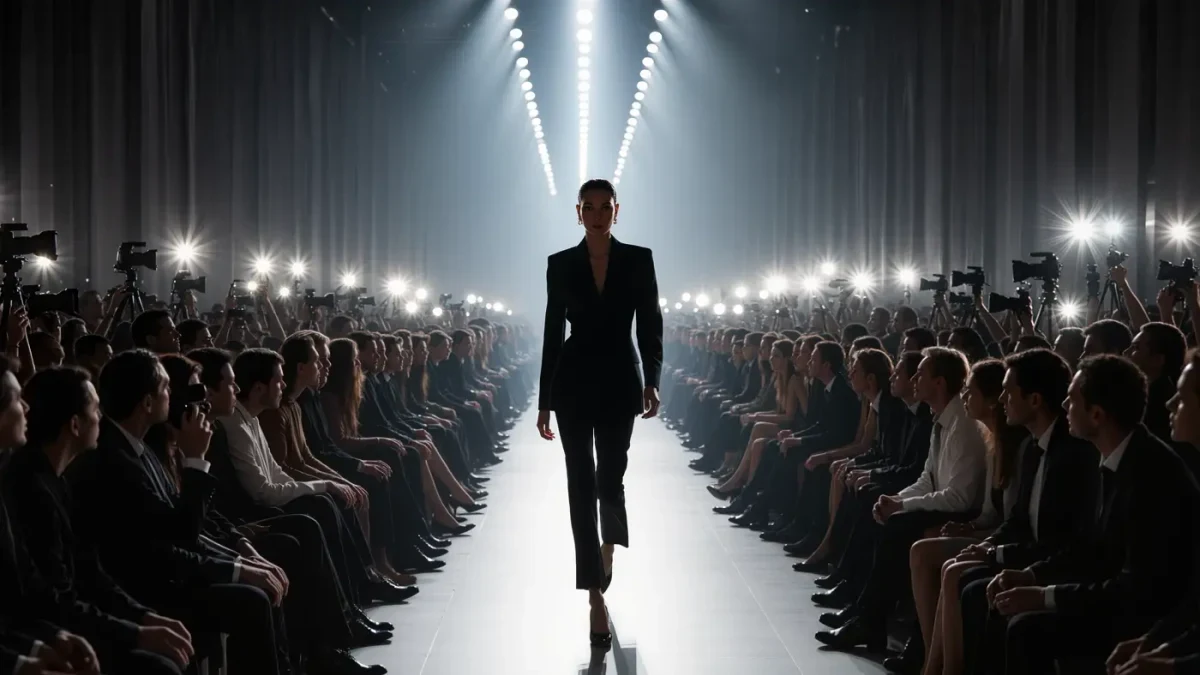
The supermodel era — roughly the late 1980s through the 1990s, when a handful of models became celebrities whose contracts ran into seven figures and whose faces sold fragrances, calendars and television — is the last time the runway's supporting cast briefly outranked its stars. Documented markers frame the era: the estimated $10 million-plus in annual earnings at its peak per model, per contemporaneous business reporting; George Michael's 'Freedom! '90 video lip-synced by the era's leading faces; and runways on which editors booked their front rows around who was walking. Its end matters more than its peak: the industry deliberately dethroned the celebrities, and the casting logic that replaced them still runs the runway.
Why did models become the story?
Because television economics hit fashion. The era's faces — Naomi Campbell, Cindy Crawford, Linda Evangelista, Christy Turlington and peers — crossed into mass media, and their fame converted runway appearances into promotions: shows became ticketed spectacle for the cameras, and a designer's booking was a marketing act. Evangelista's oft-quoted line that she would not wake up for less than $10,000 a day, from a 1990 interview, became the era's emblem, per the interview's published record. The runway responded with theatre — the era's shows grew in cast, set and running time — because the audience had expanded beyond the trade to the public.
Why did the houses end it?
Because the money flows reversed. Late-1990s houses realized that celebrity models sold the model, not the dress: coverage named the face and the fee, not the collection, and campaign budgets inflated to celebrity scale while the brand's own identity diluted. The documented correction ran through the early 2000s: houses rotated unknown faces season to season, campaign fees fell, and the 'anti-model' look — the deliberate casting of uncelebrated, sometimes unconventional faces — became editorial orthodoxy. The anonymous-cast runway is not a natural state; it is a business decision the industry made to keep the brand, not the bookings, as the product.
Did the celebrity model return?
In mutated form. Social media created a new fame economy — models with their own followings command their own premiums, and reality-television and influencer casting now occupies the front rows and often the runway. But the structural lesson held: houses treat casting as brand communication, balanced face by face between recognition and the collection's message, and the trade reads a season's casting sheet the way it reads a running order. The supermodel era's real legacy is the proof it offered: the runway can manufacture celebrity — and therefore, that its celebrity must be rationed.