Paris Haute Couture Week is not an open calendar. The Fédération de la Haute Couture et de la Mode assembles each edition — spring/summer in January, fall/winter in July — from three tiers: members of the Chambre Syndicale de la Haute Couture, corresponding members and guest members. The federation states the structure on its own events pages.
The tiering matters because in France the phrase is not a descriptive flourish. Following a decision taken on January 23, 1945, “Haute Couture” became a legally registered designation of origin, according to the federation's account of its own history, which adds that only houses and companies approved each year by a dedicated commission — run by the Chambre Syndicale de la Couture and held under the aegis of the Ministry for Industry — may become eligible for it. Annual approval, not reputation, is the gate.
What is actually on the couture calendar?
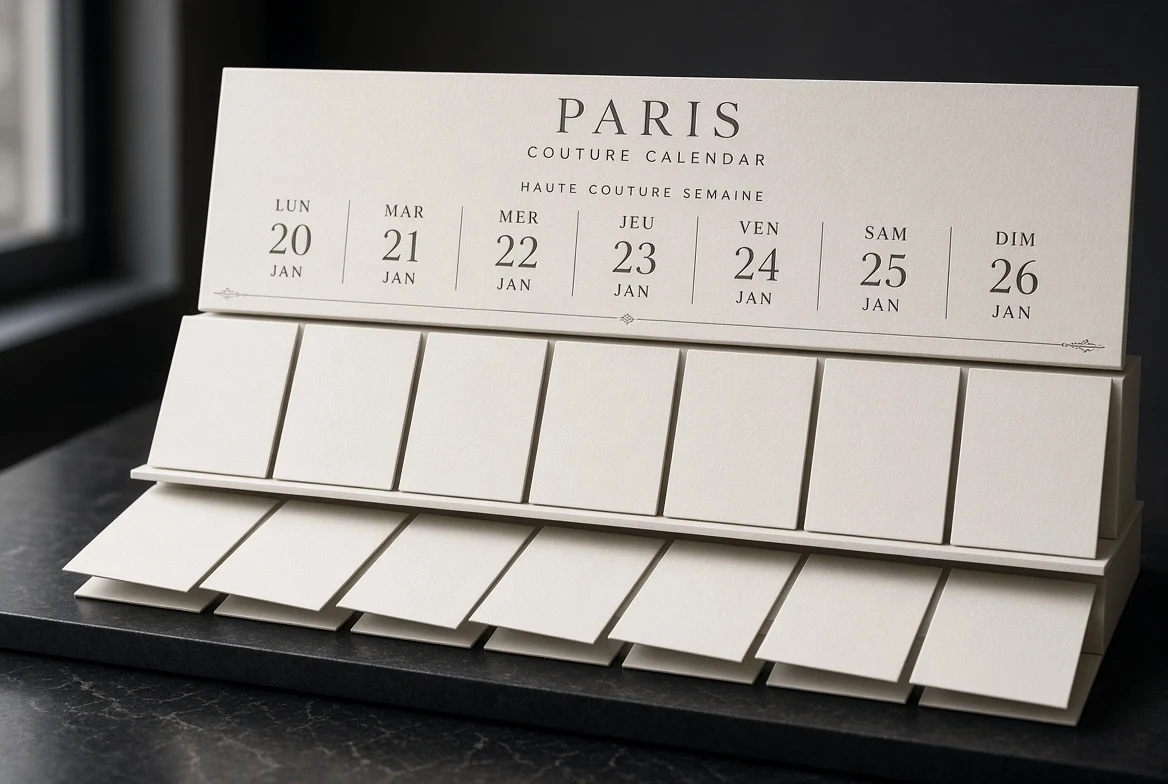
The Official Calendar of Haute Couture Week brings together members of the Chambre Syndicale de la Haute Couture, corresponding members and guest members, per the federation's events pages. Two editions run each year: spring/summer in January and fall/winter in July. The same pages note that a Haute Joaillerie calendar is organized alongside couture week.
That is a narrower architecture than the ready-to-wear weeks the federation also runs. Paris Fashion Week takes place four times a year — womenswear in September and March, menswear in January and June — and its Official Calendar is composed on the basis of the members of the Chambre Syndicale de la Mode Masculine and the Chambre Syndicale de la Mode Féminine.
The couture week is therefore the smallest and most tightly governed of the four Paris seasons, and the only one whose central term carries statutory weight. Everything downstream — slot counts, debuts, the order of the days — follows from which tier a house sits in.
How does a house move from guest to member?
The federation describes membership in its Haute Couture Committee as conditional on criteria relating to craftsmanship expertise, personalization, collection schedules and the know-how of the ateliers, on the page introducing the organization. Guest participation is handled separately: the federation says guest status requires specific examination procedures by the Haute Couture Committee.
Named coverage of the January 2026 edition set out how the tiers cash out in slots. Official members of the Chambre Syndicale de la Haute Couture, such as Chanel and Christian Dior, are guaranteed a place on the schedule; corresponding members receive additional slots on a seasonal basis; and guest members are chosen season by season by the committee, according to Fashionista's published spring 2026 couture schedule.
The practical consequence is that a guest slot is a lease, not a freehold. A house invited for one season has no standing claim on the next, which is why the guest section of any couture calendar turns over faster than the members' section. Membership is what converts a recurring invitation into a fixed place.
Who decides?
The Haute Couture Committee sits inside a federation with a defined governance structure. Sidney Toledano leads the Haute Couture Committee; Bruno Pavlovsky is president of the federation and Pascal Morand executive president, per the federation's governance page. Both sit on the Executive Committee and the Board of Directors.
The federation describes the Executive Committee as its decision-making body, composed of a maximum of seven members, and the Board of Directors as its deliberation and control body, with 19 members drawn from luxury houses. The same page states that the federation represents its members before public authorities and national, European and international institutions.
For the ready-to-wear calendars, the federation says guest houses are selected seasonally through consultative committees, and that the selection is based on an examination of the creative potential and international outreach of the candidate brands. Couture applies its own committee examination rather than that wording.
What did the 2026 couture calendars look like in practice?
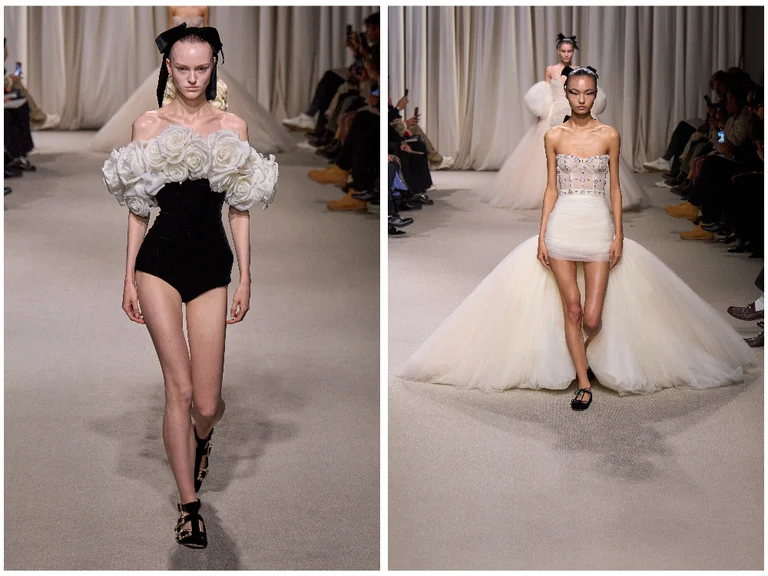
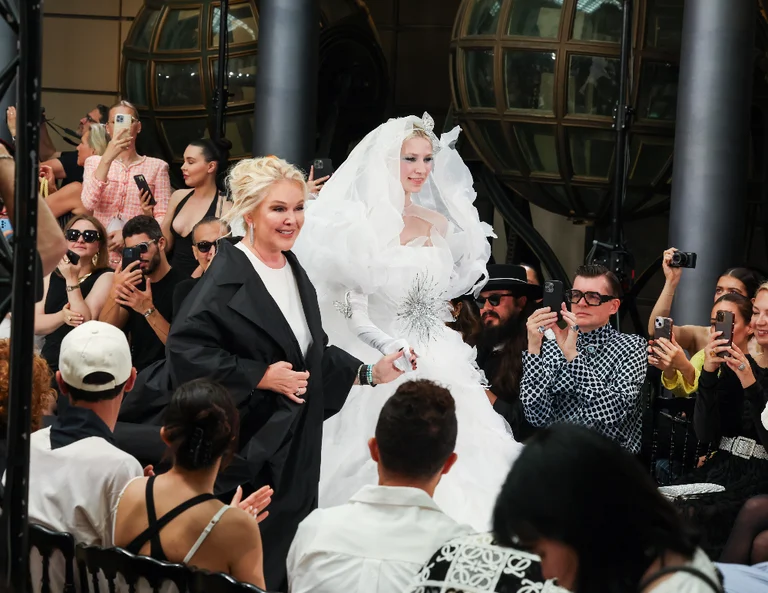
Spring 2026 couture week in Paris ran January 26 to 29, 2026, per Fashionista's schedule, which listed Phan Huy and Celia Kritharioti as new to that season's calendar and flagged Jonathan Anderson's first couture collection for Christian Dior and Matthieu Blazy's first couture outing for Chanel. Fall 2026 couture week ran July 6 to 9, 2026, according to the same outlet's calendar for that season, which listed Manish Malhotra showing on July 8.
Neither calendar is a fixed object. Provisional schedules are published ahead of each season and revised, so dates and line-ups shift between the first release and the week itself. The 1945 designation and the three-tier structure are the stable parts; the names beneath them are seasonal.
Why the structure survives
The lineage is long enough to explain the conservatism. The federation traces its committee to the Chambre Syndicale de la Haute Couture established in 1911, itself descended from a body founded in 1868 and renamed the Chambre Syndicale de la Couture Parisienne on December 14, 1910. Ready-to-wear and menswear chambers were added in 1973, and the organization took its current name on June 29, 2017.
A legally registered designation renewed annually by commission, and a calendar built from three defined tiers, together do the work that no amount of press attention can. A house cannot argue its way onto the couture schedule, and it cannot argue its way into the appellation.