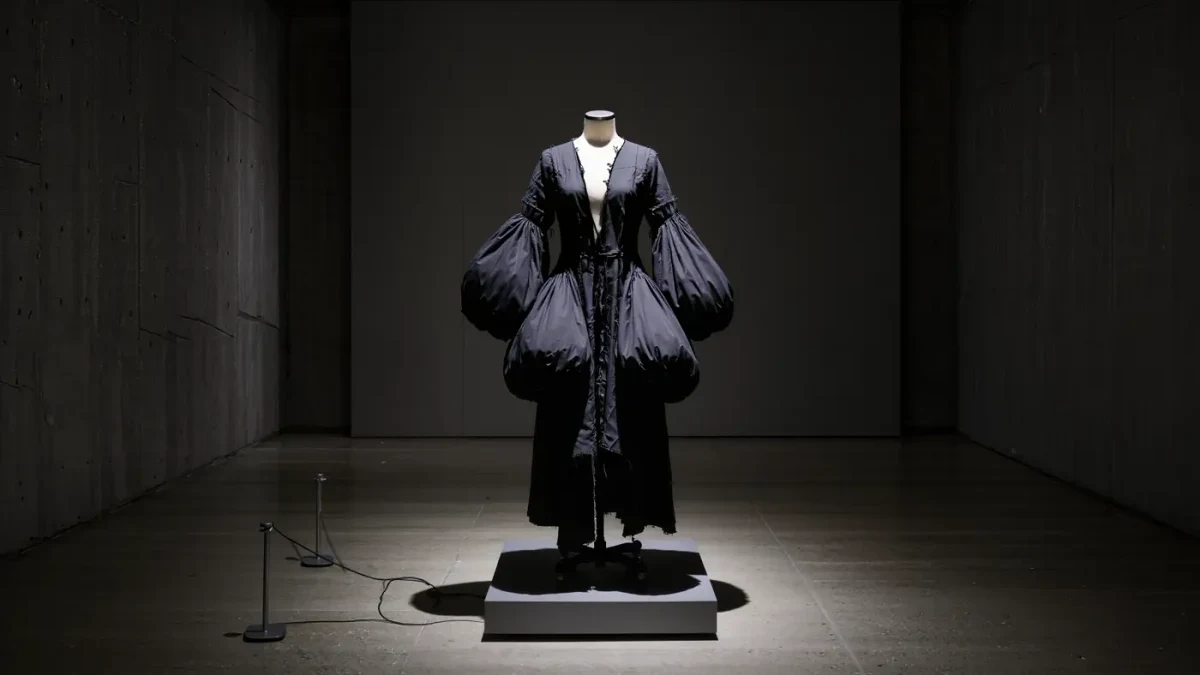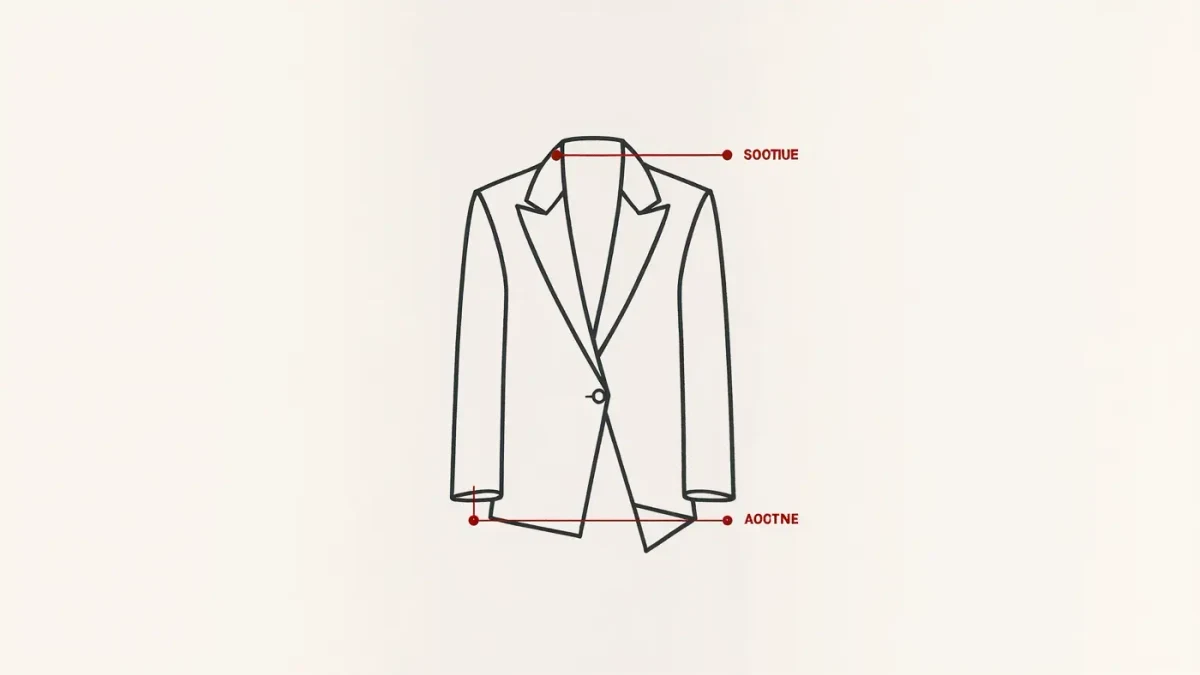
Rei Kawakubo founded Comme des Garçons in Tokyo in 1969, incorporated it in 1973 and showed in Paris for the first time in 1981 — a debut that trade reviewers of the period read as an attack on the Western silhouette, per contemporaneous coverage, and that set the terms of her career ever since. Kawakubo designs against the established vocabulary of fit, symmetry and decoration: garments with holes, humps, mismatched sleeves and deliberately 'wrong' proportions. Nearly half a century on, she remains the head of a company that spans mainline collections, dozens of lines and the Dover Street Market stores she launched in 2004.
Why did the Paris debut matter so much?
Because it arrived as a counter-proposal. The early-1980s Paris scene was dominated by polished, body-affirming glamour; Kawakubo showed black, torn-looking knits, dropped shoulders and asymmetry — garments that treated imperfection as construction rather than accident. Critics of the period were divided, with some reviews dismissive, but the collections' coherence over successive seasons converted shock into a movement: the Belgian and Japanese designers who reshaped late-20th-century fashion all worked in the space that debut opened. Her 1982 knits were famously described in the trade as evoking the distress of poverty — a charge that underestimated the intent, and one she answered with work rather than statements.
What is 'the in-between'?
The curator Andrew Bolton's phrase for Kawakubo's method, coined for the 2017 Costume Institute exhibition 'Rei Kawakubo/Comme des Garçons: Art of the In-Between' — only the second Costume Institute show devoted to a living designer since Yves Saint Laurent in 1983, per the Met's exhibition records. The exhibition organized her work around opposites resolved into hybrids: east/west, male/female, high/low, self/other. What it documented was a designer who does not sketch in the conventional sense but works through draping, testing and refusal until a garment expresses an idea she can stand behind — an approach she has described in sparse, occasional interviews.
How does the business side work?
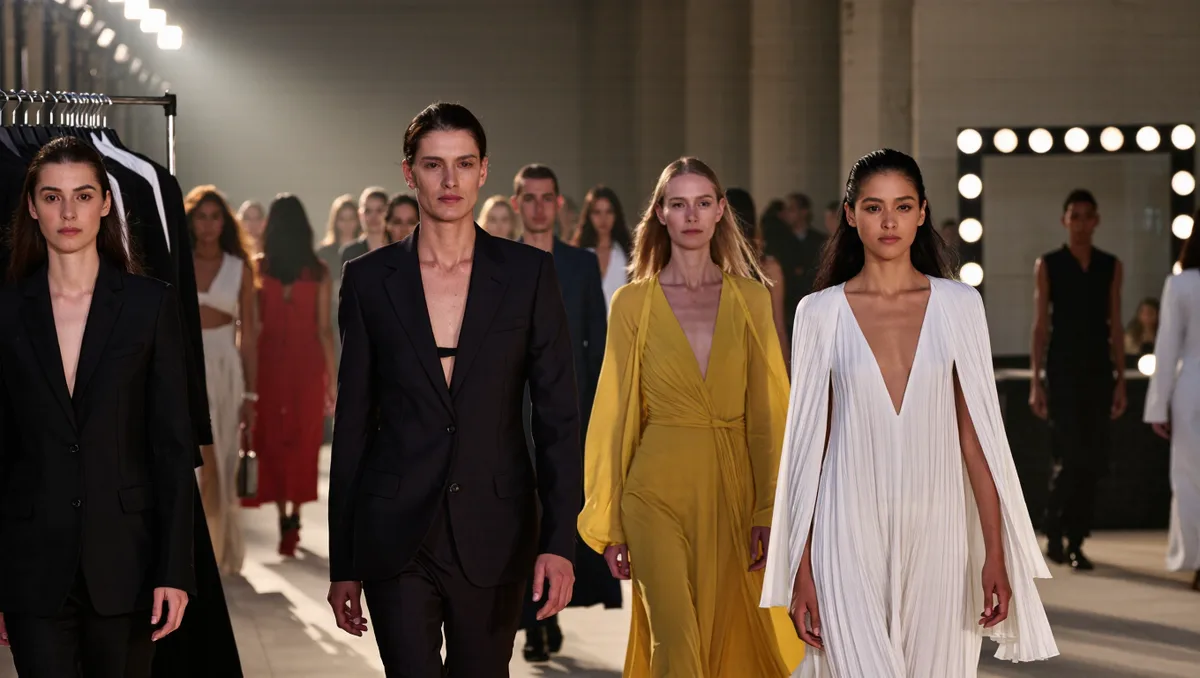
Quietly and at scale. Comme des Garçons operates as an independent company with Kawakubo and her longtime partner Adrian Joffe at its head, distributing multiple collections — mainline, Homme Plus, Play and a long roster of diffusion lines — alongside the Dover Street Market retail concept, now in London, New York, Los Angeles, Tokyo, Singapore and Beijing, per the company's own listings. The commerce funds the freedom: the profitable diffusion lines and stores underwrite the uncompromising mainline shows in Paris twice a year.
Kawakubo grants almost no interviews, takes no bows in conventional form, and has framed her practice as designing things that did not exist before. The trade's shorthand for that position is 'the conscience of fashion', but the more precise description is structural: she proved that a house could run for five decades on refusal as a business model, with the archive — not the season — as the product.