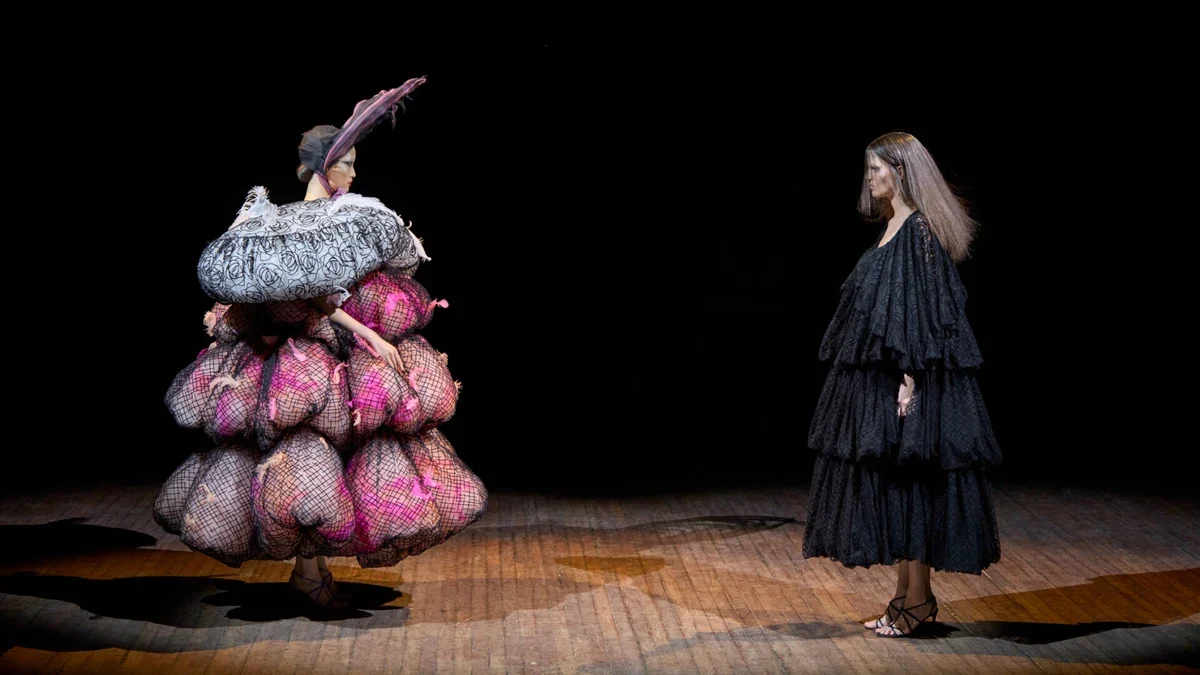
Viktor Horsting and Rolf Snoeren, who founded their Amsterdam house in 1993, have spent three decades making couture behave like conceptual art: gowns physically framed and hung like paintings, garments carrying stitched statements instead of ornament, collections staged as performances of an idea — a body of work documented in major museum retrospectives, including the Kunsthal Rotterdam's 'Viktor & Rolf: Fashion Artists 25 Years' in 2016 and the 2015–16 National Gallery of Victoria survey, per the museums' records. Their premise, stated across the career, is that a collection can be a sentence: the clothes make an argument, and the argument is the show.
What did the framed dresses actually do?
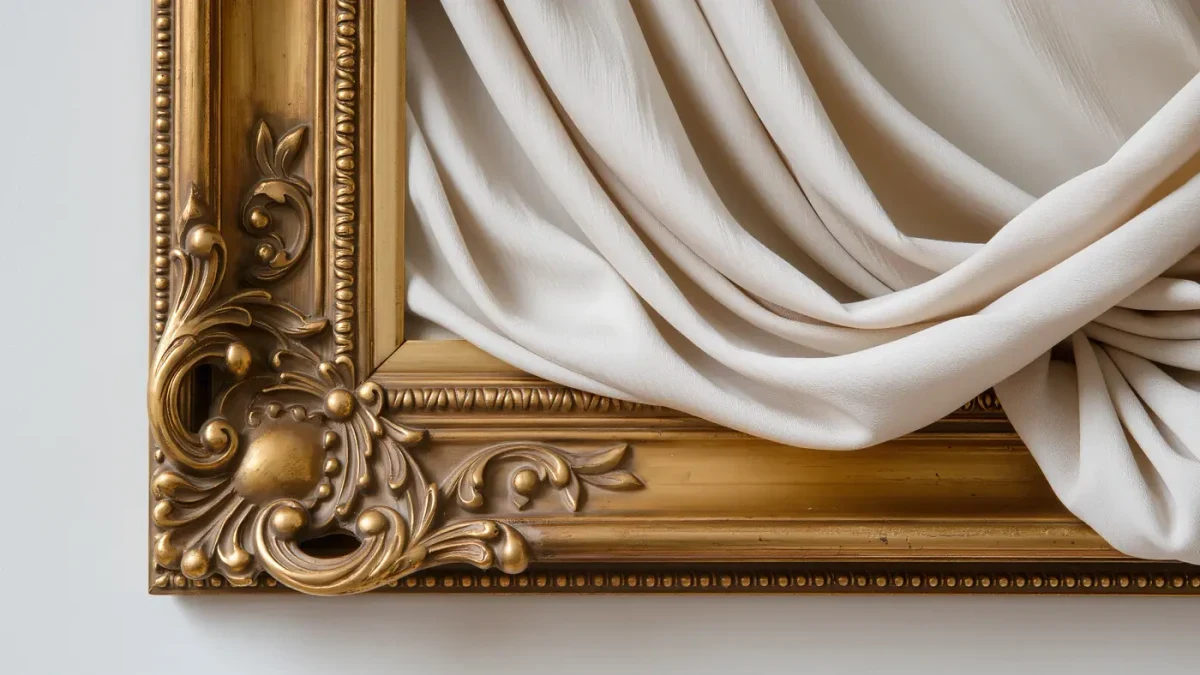
They forced the museum question onto the runway. The 'Bedtime Story' show of 2005 presented models carrying framed garments — bed-sheet fabrics in gilt frames — and the 2015 'Wearable Art' couture collection went further: canonical looks from the archive were reproduced as framed, deliberately unwearable paintings shown beside their wearable versions, per the collection's documented staging. The gesture made explicit what museums had been deciding for years: the couple's work is collected and exhibited as art objects, and the designers answered by controlling the framing themselves, literally. The same collection's later addition of 'wearable paintings' that models wore on their bodies completed the argument in both directions.
How literal can a statement get?
In their hands, as literal as a sentence. The 2008 autumn couture show 'NO' and its successors — 'Credit Crunch Couture' among them — stitched phrases, exclamations and typographic fragments into the garments themselves, so the dress read at a distance as text and up close as embroidery, per contemporaneous coverage. The method's seriousness is easy to miss: the couple treat couture's handcraft — embroidery, beading, structuring — as the medium that makes a joke into an object, which is why the statements survive in museum conditions. Craft is the grammar; the sentence is the content.
Why does their model keep mattering?
Because they proved the art-fashion border is crossable in both directions without losing either audience. The house runs a commercial perfume and ready-to-wear business alongside the couture statements, and the statements themselves — staged in Paris on the official calendar — draw the museum acquisitions and touring retrospectives most fashion houses never receive. The trade's verdict has stabilized around a simple formulation: Viktor & Rolf are the designers who made it legitimate to ask, of any couture collection, not 'is it beautiful?' but 'what does it say?' — and to expect an answer stitched into the lining.