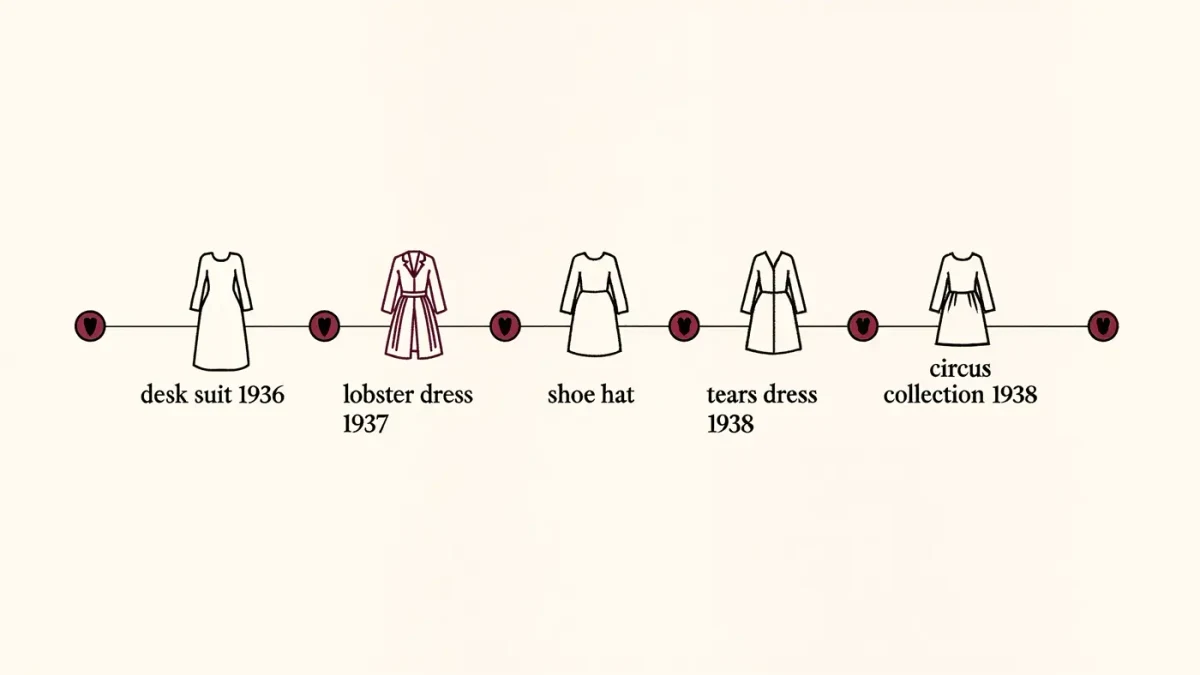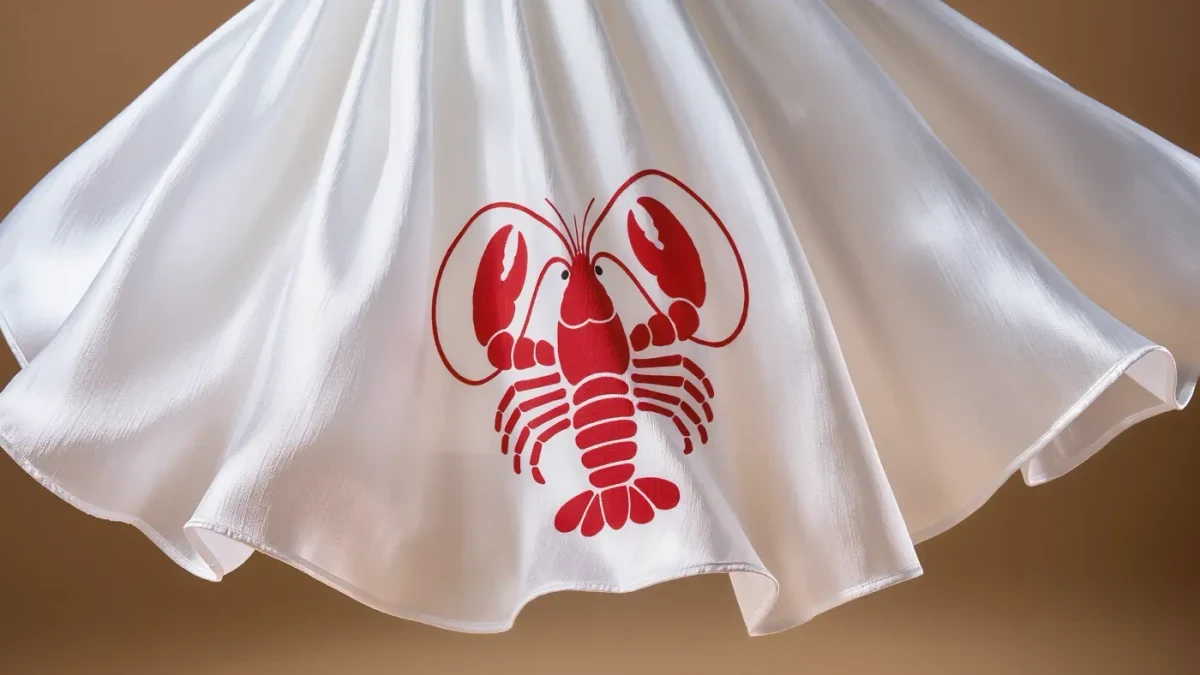
Elsa Schiaparelli's most reproduced garment — the 1937 white organza dinner dress printed with a large red lobster, positioned low on the skirt where an apron would sit — came out of a direct collaboration with Salvador Dalí, per the garment's documented history in museum collections. It was one of a run of works from the decade in which the Roman-born designer treated the dress as a site for Surrealist argument: a desk-shaped suit, gloves with applied fingernails, a hat shaped like a shoe. Fashion had commissioned art before; Schiaparelli made the garment itself the artwork.
Why was Schiaparelli receptive to Surrealism?
Because her design method was already conceptual. Schiaparelli, who opened her Paris house in the 1920s and showed her first true collection in 1935, worked from ideas rather than from draping skill — her own memoir concedes she was not a trained cutter, per published history — and built collections around themes: circus, zodiac, music. Surrealism gave her a ready-made visual vocabulary for that method, and Paris in the 1930s put its practitioners within walking distance. The collaboration with Dalí produced several documented pieces beyond the lobster dress, including the desk suit of 1936–37, in which pockets became desk drawers with matching trim.
How did the Surrealist pieces actually work as fashion?
As wearables with a twist, not costumes. The lobster print reads at once as absurdity and as allusion — Dalí had painted lobsters as objects of erotic anxiety, and Schiaparelli domesticated the image into dinner-wear worn, famously, by the Duchess of Windsor, per contemporary society reporting. The shoe hat, the nail gloves, the Tears dress of 1938 — printed with a Dalí design of torn flesh — all function first as garments of their season, cut and finished to house standards, with the destabilizing image applied where the body would carry it. That discipline — idea executed in couture construction — is why the pieces entered museum collections as design rather than memorabilia.
What survives of the method?
The entire category of the conceptual fashion object. Every house that builds a collection around a theme, an artwork or a provocation works ground Schiaparelli cleared: the themed collection, the artist collaboration, the garment that exists to be written about as much as worn. Her house itself lapsed after the Second World War and was revived at the end of the 20th century; its modern couture practice under recent creative directors has made the archive's Surrealist inheritance — the pump, the lobster, the celestial motifs — a recurring citation, per the house's published collections.
Museum retrospectives, including major Paris and New York exhibitions of her work, have secured the standing the trade already granted: Schiaparelli is cited in design history as the first designer who treated the collection as an argument in art history — and made the argument sell.