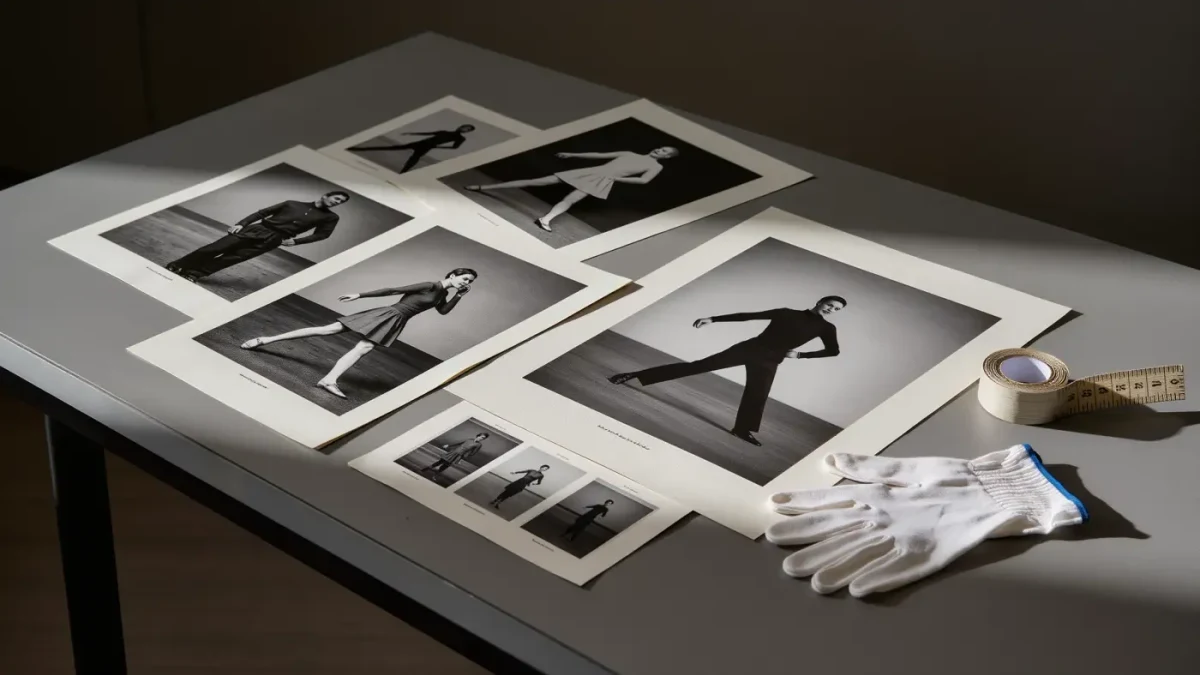
Richard Avedon and Irving Penn are the two photographers most responsible for fashion photography's citizenship in art: between them, across careers begun in the 1940s at Harper's Bazaar and Vogue, they established the visual conventions — Penn's grey-paper studio stillness, Avedon's white void with figures isolated mid-gesture — that later decades treated as photography's modern grammar, per the museums' documented archives. Both ended where the argument concluded: museum retrospectives in their lifetimes, collections held by the great institutions, and fashion images — made for magazine commissions — exhibited beside portraiture made for history. The migration was contested at the time; it is now the settled record.
What did each actually invent?
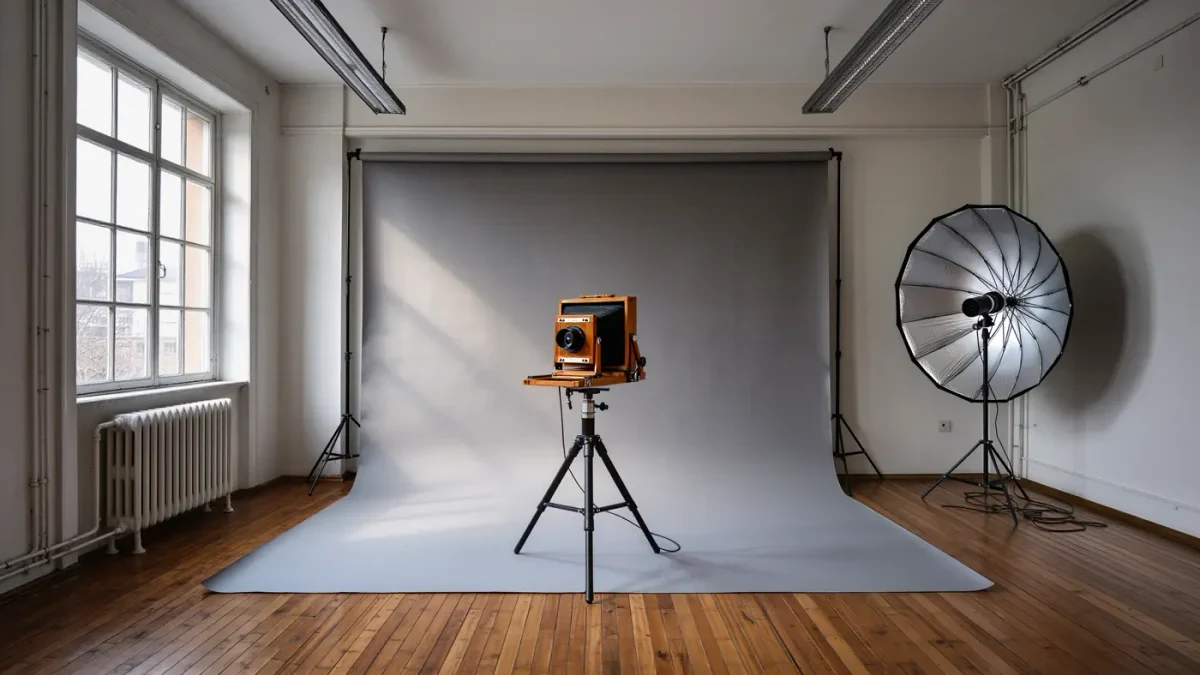
Different reductions of the same noise. Penn, who joined Vogue in 1943, built his signature on restriction: models posed against painted grey backdrops, in controlled northern light, their garments recorded with a stillness that owed as much to his early still-life discipline as to fashion; his postwar Paris reports — collections photographed in a single corner of a studio, the season compressed into one corner's geometry — made the clothes read as objects of design rather than moments of society, per the printed archive of his Vogue work. Avedon, who moved from Harper's Bazaar to Vogue in 1966, went the other way: motion, extreme grain, the white void in which a subject's gesture carries everything. His fashion images borrow documentary ethics — the sense that something uncontrollable is happening — and stage it.
How did fashion photographs become museum objects?
Through three mechanisms the pair exemplify. First, authorship: both photographers printed, signed and editioned their work, converting commission into oeuvre; Avedon's 1978 Metropolitan Museum retrospective and Penn's 1984 Museum of Modern Art survey institutionalized their fashion work inside career surveys, per the museums' records. Second, the archive: both maintained meticulous vintage prints, giving museums something to collect. Third, argument: critics and curators made the case that the images documented their era's construction of image itself — fashion as evidence of how a society wanted to look.
What do their conventions control today?
More than the industry notices. The white or neutral studio sweep, the full-length product record, the motion blur that signifies vitality, the plain backdrop that signifies seriousness — each is a default inherited from their practice, and each time a contemporary campaign refuses them (documentary location, phone-camera texture), the refusal reads against the baseline they set. Fashion photography's museum presence — dedicated collections, biennials, market prices at auction — runs on the ground they prepared: that an image made to sell a dress can also be an artwork, if the eye behind it is one.