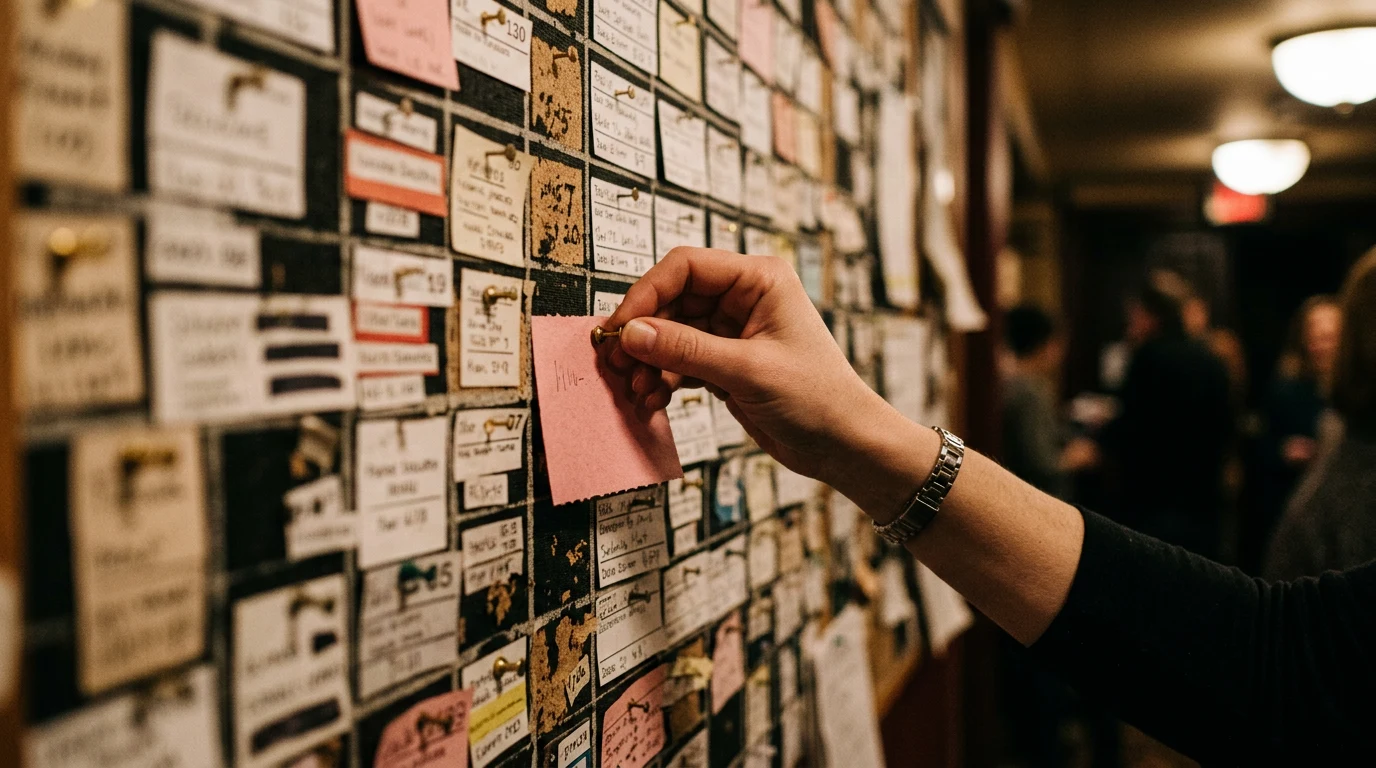
Every fashion week runs two programmes at once: the official calendar, published by the city's organizing body, and the off-schedule circuit — shows, presentations and screenings staged outside it, usually by younger and independent designers who either cannot meet the official requirements or choose not to, per the structure visible on every season's schedule. The off-schedule list is not a fringe. In London and Paris it routinely runs to dozens of events per season, and trade coverage credits it with a consistent share of the careers that later define the official week.
Why does a designer go off-schedule?
Cost and control. An official slot is granted, not bought, but the production around it — venue, casting, a show in the week's competitive windows — prices out many independents; off-schedule organizers offer lower-fee venues, smaller fees and time slots the big houses leave free: mornings before the first official show, evenings after the last. Some designers also choose the margin deliberately: an off-schedule venue lets a young house stage what the official week's formats don't accommodate — performances, salon showings, screenings — without asking permission from a federation's format expectations.
How does the press find the shows?
Through the same apparatus, at smaller scale. Off-schedule programmes publish their own schedules, and the trade's scouts — stylists, junior editors, casting directors, buyers for concept stores — work the circuit precisely because discovery is its product. The practical filter is invitation lists and venue capacity: a gallery show for 60 seats is a different media economy than a 600-seat hall, and coverage reflects it — fewer outlets, closer attention, and reviews that treat a 15-look collection as a complete statement rather than a portion of one. Prize structures reinforce the pipeline: design awards whose alumni lists the trade tracks routinely draw from off-schedule graduates, and winning one converts directly into calendar access.
What are the trade's honest limits on the format?
Buyers order cautiously from off-schedule houses because the infrastructure behind the show may not exist yet — production capacity, delivery reliability, service — and the six-month wholesale cycle punishes failure at scale. The circuit's typical commercial cure is small-batch direct sales and made-to-order, which trade reporting has documented as the standard early model; the house graduates to the calendar when its operations, not its press, are ready. Off-schedule showing is therefore best read as a phase in a development path rather than an identity: the margin's job is to let the work appear before the balance sheet can justify the stage, and the season's most reliable place to see fashion five years early is, as ever, the smallest room on the schedule.