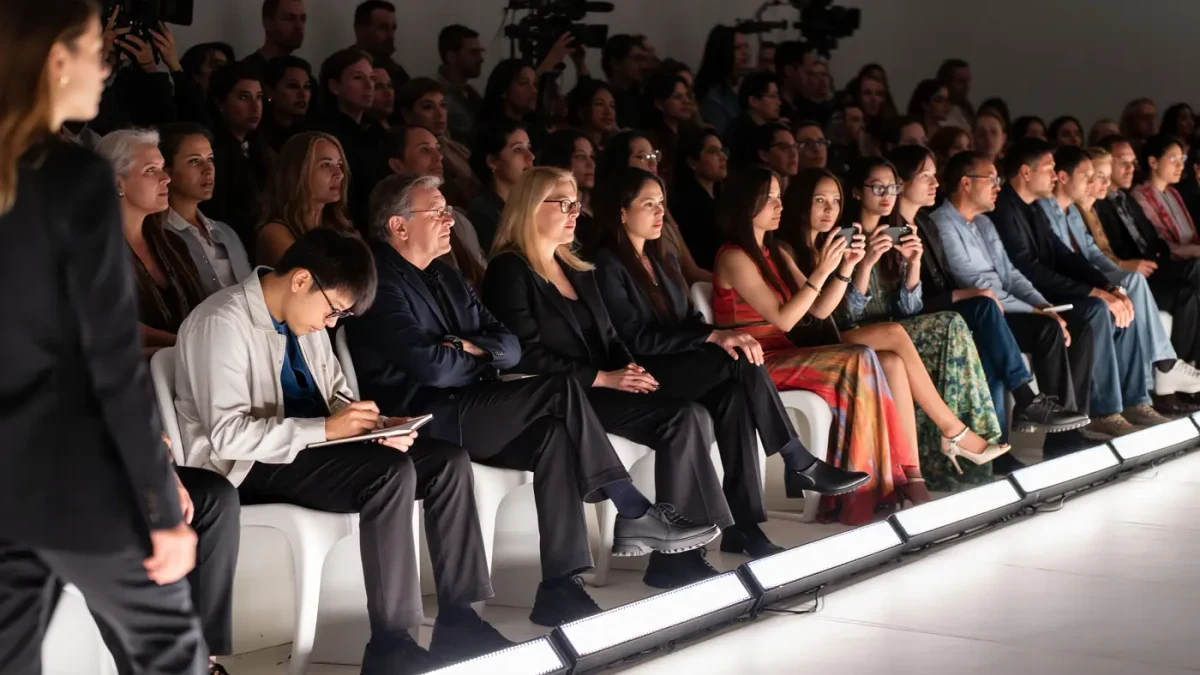
The front row of a major fashion show is assigned seating with a logic the industry treats as common knowledge: the chairs closest to the runway's first stretch go to the people whose response the house most needs — the buyers who write the season's orders, the editors and critics whose reviews frame it, and the clients and celebrities whose presence photographs as endorsement, per consistent show-production practice. The seating chart is drawn days in advance by the house's press office, revised after confirmations, and treated as a diplomatic document: two seats out of place can become a story of their own.
What does each front-row constituency actually do there?
Work, not watch. Buyers sit where they can read construction and proportion for the order they will place within days; critics sit where they can see the whole look against the set, because the review is written from the same vantage as the photography; stylists and casting directors read the cast for their own coming seasons. Celebrities perform a different function — the arrival photographs outside the venue are booked as carefully as the show inside, and coverage of the front row generates the mainstream press a trade show cannot. Each constituency is there to produce something the house needs within a different clock: orders, verdicts, or reach.
How is proximity decided?
By commercial weight and relationship history. Trade practice seats top buyers of the largest accounts nearest the start of the runway — they see the most looks per second of walking — followed by editors in order of outlet weight and personal standing, with the rest of the room descending through the industry's actual hierarchy: stylists, influencers, alumni, staff, students and, in the last rows and standing, the young press the house is cultivating. Empty seats are a calculated presence too: an unclaimed chair can signal a relationship under repair, which is why the press reads the rows like a scoreboard. Seating changes between seasons — a demotion from row one to row three is noticed, reported and occasionally answered by the outlet switching coverage to a rival show.
Is the front row still what it was?
Partly. The livestream and social casting diluted the room's monopoly: a show's audience is now millions, and influencers with followings outrank some editors by the only metric the house's marketing can measure. What has not changed is the function — the first row remains where the house concentrates the people whose immediate reactions move orders and coverage, and the choreography of arrival, seating and exit is still staged. The front row is, in the end, the industry's own org chart photographed twice a year, in good light.