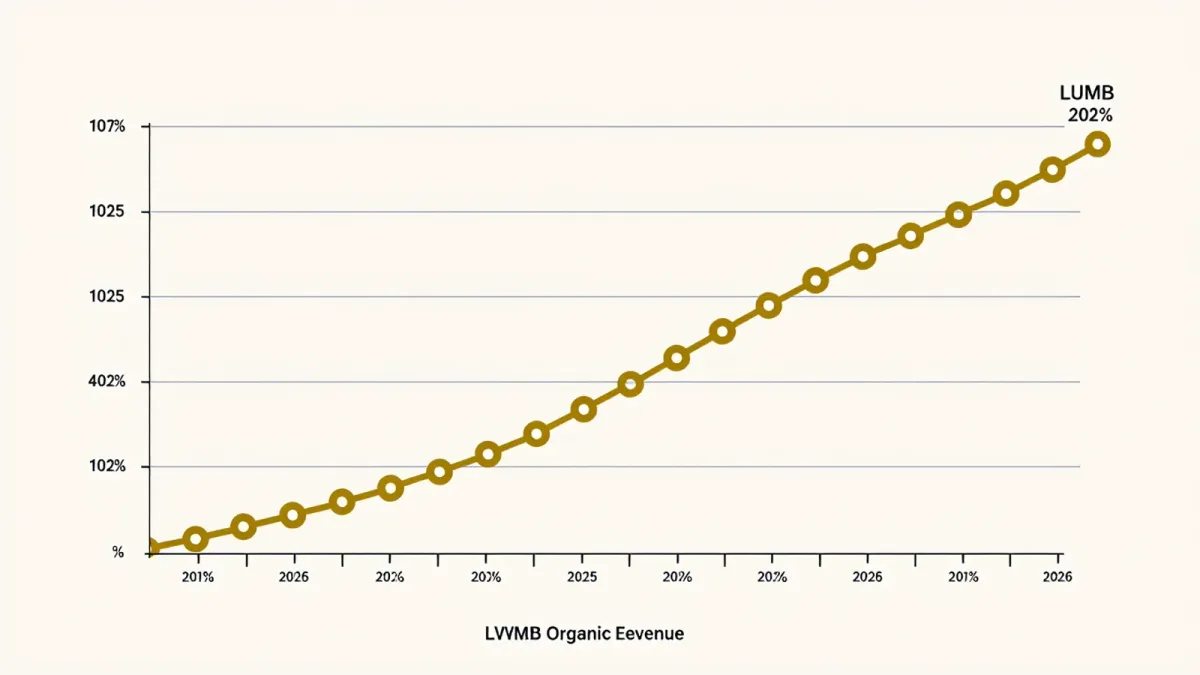
LVMH's Fashion & Leather Goods division returned to organic revenue growth in the second quarter of 2026, per the group's half-year results published in July, which reported first-half group revenue of €38.6 billion — the division's turn marking the first positive print since its 2% organic decline in the first quarter. The swing lands exactly where the group's design strategy predicted: the quarters carrying full collections from the 2024–25 creative resets, including the new regimes at its two largest fashion houses.
What changed between the two quarters?
The collections reached the floor. The first quarter measured the transition's residual dip; the second carried the spring deliveries of the new designers' debut cycles — the collections shown from the autumn 2025 season through the early-2026 weeks — into stores. The division's return to organic growth, on a softer comparative and in an environment the group still describes as geopolitically affected, is the first numerical evidence that the design appointments are converting. The group's published messaging attributed the improvement to the collections and to resilience in its key markets; analysts read the same figures as early, not decisive, confirmation.
Why is one quarter's swing read so carefully?
Because the sector's cycle turns on this division. Fashion & Leather Goods is both the group's profit core and the industry's reference: its growth restarts supplier orders, advertising spending and, materially, the confidence that funds the next generation of designer appointments. A single positive quarter after a decline is a data point, not a trend — the trade's coverage of the results framed the recovery as gradual, with the division's full-year trajectory dependent on the autumn collections and on whether the momentum holds through the sector's key Asian markets.
What does it mean for the design story?
That the industry's biggest experiment in creative succession has its first defensive number. The 2024–25 reshuffle — consolidated mandates, high-profile appointments, multi-season patience — was criticized as expensive volatility while the first quarter printed negative; the second quarter's turn gives management its rebuttal. The burden of proof now runs through the second half: the autumn-winter collections now in development are the first designed entirely inside the new regimes, and their commercial season will decide whether the reset is recorded as a turnaround or an expensive interlude.